
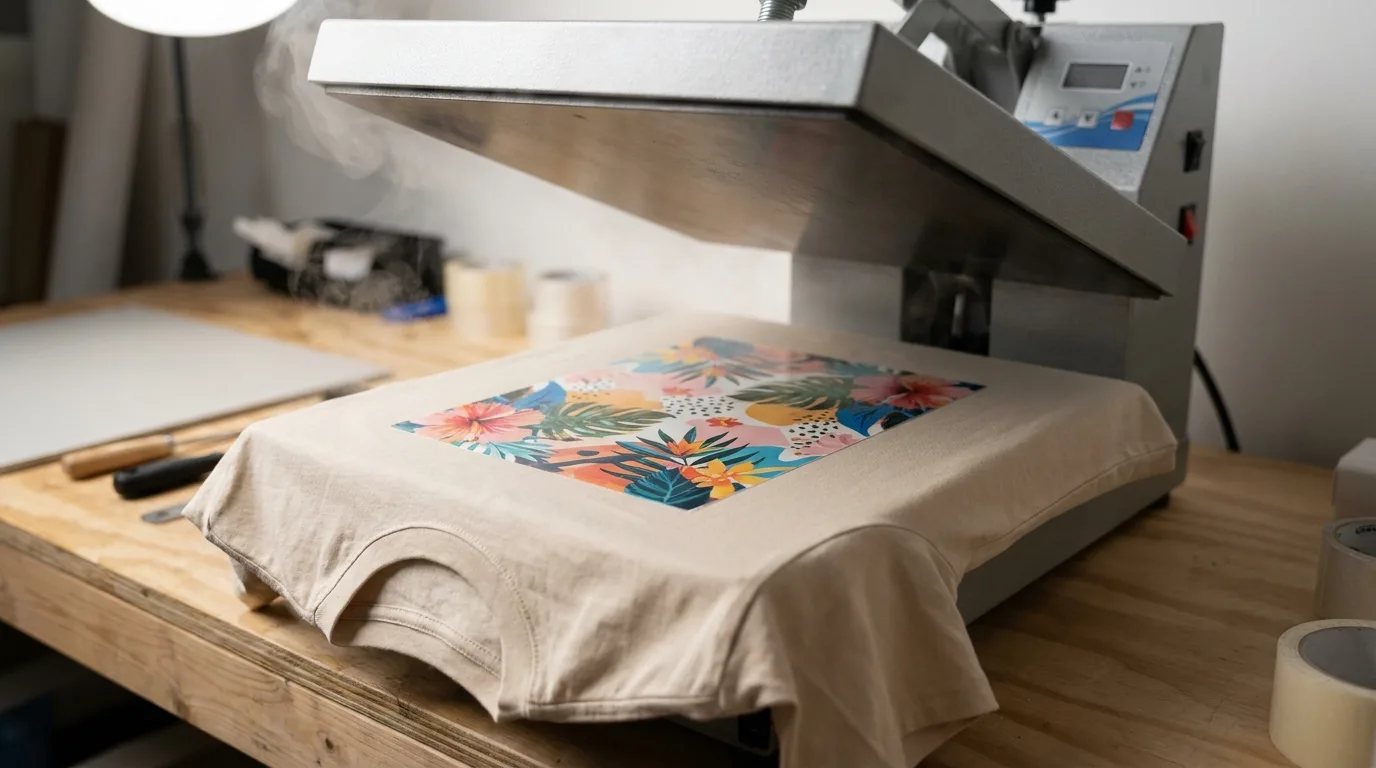
If you sell custom apparel or run a small print shop, you've probably heard the buzz about DTF printing. Direct-to-film (DTF) printing is a versatile method that transfers vivid, full-color designs onto almost any fabric using a printed film and heat. In this guide, we'll break down exactly what DTF printing is, how the process works step by step, and why so many creators are switching to it.
What Is DTF Printing?
DTF printing stands for direct-to-film printing. Instead of printing your design straight onto a garment like direct-to-garment (DTG), you print it onto a special PET film, coat it with adhesive powder, cure it, and then heat press it onto your product. The result is a durable, stretchy, full-color transfer that bonds tightly to the fabric.
What makes DTF so popular is its flexibility. A single transfer can be applied to cotton, polyester, blends, canvas, and more, which is something older methods struggle with. That's why DTF printing has become a favorite for shops that want one workflow for dozens of product types. Unlike vinyl, which is cut from solid colored sheets, or screen printing, which needs a separate screen per color, DTF prints unlimited colors in a single pass. That alone removes a huge amount of setup and labor from your day-to-day production.
It also helps to understand where DTF fits in the bigger printing picture. Sublimation only works on polyester and light colors, screen printing rewards large bulk runs, and heat transfer vinyl is best for simple one-color text. DTF sits comfortably in the middle, giving you photo-quality detail, the ability to print on dark and light garments alike, and economics that make sense even for a single shirt.
How Does DTF Printing Work? Step by Step
The DTF process involves several precise stages, but once you understand the flow it's surprisingly straightforward. Here's how a finished transfer comes together:
- Design prep: Your artwork is set up at the correct size and resolution, usually with a white underbase layer that makes colors pop on dark fabrics.
- Film printing: A modified inkjet printer lays down CMYK colors and then a layer of white ink onto the PET film.
- Powder application: Hot-melt adhesive powder is sprinkled over the wet ink so it sticks only to the printed areas.
- Curing: The film is heated to melt and bond the powder, creating a ready-to-press transfer.
- Heat pressing: The film is positioned on the garment and pressed with heat and pressure, then the carrier film is peeled away.
Once cured, the transfer can be stored for weeks or even months, which makes it easy to print in batches and press on demand. This storability is a quiet superpower: you can print a stack of your best-selling designs ahead of time, then press them the moment an order arrives. That shaves hours off your turnaround and lets a one-person shop fulfill orders almost instantly.
What Equipment Do You Need?
A full in-house setup includes a DTF printer, a powder shaker or curing oven, and a heat press. That's a significant investment, which is why many sellers skip the hardware entirely and order ready-made transfers. You can browse pre-printed options like our DTF transfers by size and press them yourself with just a basic heat press at home. Going this route means you avoid maintenance, ink waste, and the learning curve of dialing in a printer, and you still get professional, press-ready results.
What Can You Print With DTF?
One of the biggest advantages of DTF is how many surfaces it works on. Because the adhesive bonds to fibers rather than dyeing them, you get crisp results across a huge range of items.
- Cotton, polyester, and tri-blend T-shirts
- Hoodies, crewneck sweatshirts, and fleece
- Tote bags, aprons, and canvas accessories
- Caps, beanies, and other curved items
- Performance and athletic wear
This makes DTF ideal for mixed orders. A customer can request the same logo on a tee, a hoodie, and a tote, and you can fulfill all three with transfers from one print run. Pair them with blanks from our full product catalog to keep everything in one place.
Real-World Use Cases for DTF Printing
DTF shines in everyday business situations where flexibility matters most. A few examples show just how broad its appeal is:
- Local sports teams: Print numbered jerseys and matching parent shirts in full color without paying per-color screen fees.
- Etsy and Shopify sellers: Offer thousands of design variations without holding inventory, pressing each item only after it sells.
- Event and family merch: Reunions, weddings, and fundraisers often need small, colorful runs on a deadline, which is exactly DTF's sweet spot.
- Corporate branding: Put a detailed logo on tees, polos, caps, and tote giveaways using a single consistent workflow.
If you print in volume, gang sheets stretch your budget even further. Our online gang sheet builder lets you pack multiple designs onto one sheet so you waste less film and pay less per design.
Common DTF Mistakes Beginners Should Avoid
Most DTF problems trace back to a handful of avoidable errors. Knowing them upfront saves you wasted film and frustrated customers. The biggest one is under-pressing, where too little heat, time, or pressure leaves the adhesive only partially melted. Another frequent slip is skipping the pre-press step that removes moisture from the garment, which weakens the bond. Beginners also tend to peel the carrier film at the wrong moment, ignore the difference between hot and cold peel transfers, or rely on a home iron instead of a proper heat press. Finally, low-resolution artwork without a clean white underbase produces dull, jagged prints. Avoid these and you'll see a dramatic jump in quality and consistency.
DTF Printing Best Practices for Long-Lasting Results
Great results come down to consistency. Always confirm your press temperature, time, and pressure match the transfer's recommendations, since under-pressing is the top cause of peeling. Pre-press the garment for a few seconds to remove moisture, and let the finished print cool before stretching it. For longevity, advise customers to wash inside out in cold water and skip the high-heat dryer. These small habits keep colors vibrant and edges firmly bonded wash after wash. It also pays to verify your press temperature with an infrared thermometer, because many presses read several degrees off from their display, which quietly sabotages otherwise perfect settings.
Frequently Asked Questions
Is DTF printing better than DTG?
It depends on your needs. DTG prints directly onto cotton garments and gives an ultra-soft hand on light fabrics, while DTF works on nearly any material and stores transfers for later pressing. For mixed product lines, DTF is usually the more versatile choice.
How durable are DTF transfers?
When applied correctly, DTF transfers typically last 50 or more wash cycles without significant cracking or fading. Proper press settings and gentle laundering are the keys to maximum durability.
Do I need expensive equipment to start?
No. You can order pre-printed transfers and apply them with an affordable heat press, which lets you start a custom apparel business without buying a DTF printer or curing oven.
Can DTF print white and light colors on dark shirts?
Yes. DTF uses a white ink underbase, so even light text and bright colors stay vivid on black and other dark garments without bleeding.
How long can I store DTF transfers before pressing?
Properly cured transfers store well for several weeks or even months when kept flat, cool, and away from direct sunlight and humidity. This lets you print popular designs in advance and press them on demand.
What size heat press do I need?
A standard 15-by-15-inch clamshell or swing-away press handles most shirt and hoodie work. If you plan to press oversized or all-over designs, a larger platen gives you more room and more even pressure.
Ready to put DTF printing to work for your brand? Explore our transfers, blanks, and gang sheet tools at Mr Beat Print Studio and start creating press-ready designs today.