
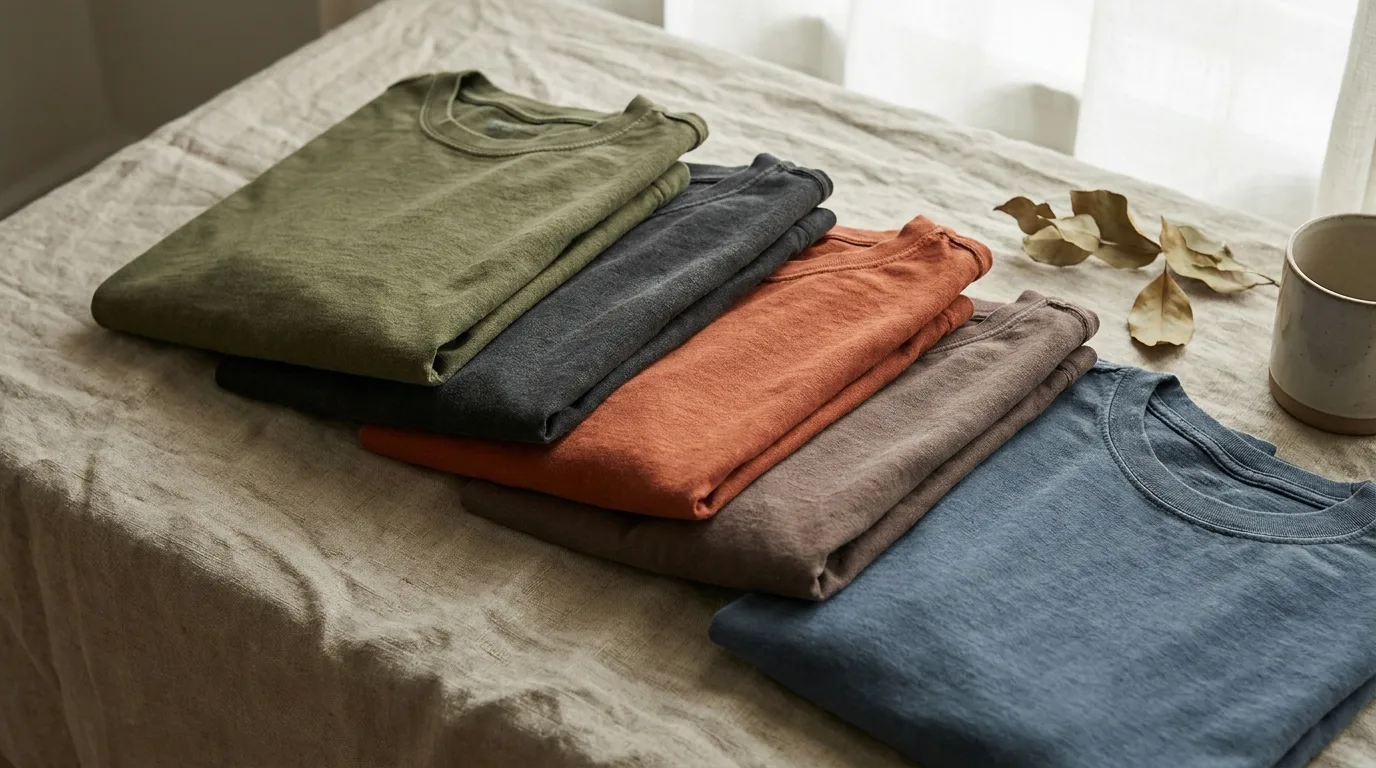
If you've shopped for premium blanks lately, you've probably seen the term everywhere. So what is a garment-dyed t-shirt, and why are makers and POD sellers obsessed with them? In short, it's a tee dyed after it's sewn, creating that broken-in, vintage softness shoppers happily pay more for. These tees have become a cornerstone of streetwear, boutique, and elevated merch lines because they deliver a premium feel right out of the box. Let's dig into how the process works and how to use these tees effectively in your lineup.
What Is a Garment-Dyed T-Shirt, Exactly?
A garment-dyed t-shirt is constructed first from undyed or natural fabric, then dyed as a complete garment. This is different from the standard process, where yarn or fabric is dyed before cutting and sewing. Dyeing the finished piece lets color settle into the seams, stitches, and fibers in a uniquely organic way, producing subtle tonal variation across the shirt that mass-produced tees simply can't replicate.
- Standard tees are dyed as fabric, then cut and sewn, giving uniform color.
- Garment-dyed tees are sewn first, then dyed, giving a soft, lived-in look.
- The result is rich color depth and a hand-feel that already feels washed and worn.
How the Garment Dyeing Process Works
After the blank shirt is sewn from prepared-for-dye fabric, it goes into a dye bath where heat and agitation drive pigment into the fibers. The garment is then washed and dried, which causes a gentle, intentional shrinkage and that signature relaxed drape. Because every batch reacts slightly differently, small color variations between dye lots are normal and part of the charm rather than a defect.
Why It Feels So Soft
The wash and tumble steps relax the cotton fibers and remove stiffness, so the shirt arrives feeling like a favorite tee you've owned for years. That immediate comfort is a big reason garment-dyed styles command premium pricing and earn repeat buyers.
Pigment Dyeing and the Faded Look
Many garment-dyed tees use pigment dyes, which sit on the surface of the fibers rather than fully saturating them. This is what gives the shirt its soft, dusty, slightly faded character and why the color continues to mellow gracefully over time. If your customers love that authentic vintage vibe, pigment-dyed blanks are the way to deliver it.
Enzyme and Mineral Washes
Some premium garment-dyed tees go a step further with enzyme or mineral washes after dyeing. An enzyme wash gently softens the surface fibers for an even cozier hand, while a mineral or stone wash deepens that worn-in, weathered appearance. These finishing touches add cost but also add perceived value, so they are popular on boutique and heritage-style blanks where a premium price is expected.
Why Garment-Dyed Tees Sell at a Premium
Shoppers associate the faded, heavyweight look with boutique and streetwear brands. A garment-dyed t-shirt signals quality before anyone reads a tag, which lets you charge more and position your line as elevated. They photograph beautifully too, with rich, muted tones that pop in product shots and pair well with neutral styling and earthy backgrounds.
Explore a popular heavyweight option like our unisex garment-dyed drop-shoulder t-shirt to feel the difference for yourself before you commit to a full run.
Decorating Garment-Dyed T-Shirts
These tees take decoration well, but a few considerations help you get clean, durable results. Because the fabric is heavier and often has a slightly textured surface, your prints look and feel intentional rather than glossy. The muted base color also influences how your artwork reads, so plan your palette with the dye tone in mind.
- DTF transfers bond strongly and keep colors vivid against muted dye tones.
- Screen printing with a soft-hand approach complements the vintage aesthetic.
- Embroidery adds upscale texture that pairs naturally with the premium feel.
- Pre-press every shirt to remove moisture, since heavier cotton holds humidity.
To round out a premium collection, browse coordinating styles in our blank apparel catalog and build a cohesive, elevated lineup.
Designing for the Vintage Aesthetic
The faded, tonal nature of garment-dyed tees rewards a thoughtful design approach. Distressed textures, retro typography, and softer ink colors blend into the shirt for that worn-in, authentic feel, while crisp high-contrast logos pop and read more modern. Decide which direction fits your brand and lean into it. Tonal prints, where the artwork sits just a shade off the shirt color, are especially popular on these blanks and feel expensive without shouting.
Sourcing and Stocking Garment-Dyed Blanks
When you add garment-dyed tees to your catalog, plan around the natural variation between dye lots. Order enough of a single color at once to cover a full project so the shirts match, and keep a tight palette of proven sellers rather than chasing every trendy hue. Heavyweight options in classic tones like washed black, faded sand, and vintage olive tend to move best and photograph beautifully. Because these blanks cost more than basics, sample first, confirm the hand-feel and fit, and only then commit to volume so your inventory dollars go toward styles your customers actually want.
Care Tips to Share With Customers
Garment-dyed shirts can release a little excess dye in the first wash and may continue to fade gently over time, which is part of their appeal. Encourage customers to wash cold, wash with similar colors first, and skip high-heat drying. Setting that expectation up front prevents confusion, reduces returns, and builds trust in your brand as someone who knows the product.
Frequently Asked Questions
Is a garment-dyed t-shirt better quality than a regular tee?
Not necessarily better, but different. Garment-dyed tees offer a softer, lived-in feel and richer color depth that many shoppers perceive as more premium, which is why they often command higher prices.
Will a garment-dyed t-shirt shrink or fade?
These tees are washed during production, so additional shrinkage is minimal, though some occurs. Gentle fading over time is normal and is part of the vintage look. Cold washing and low-heat drying preserve color and fit.
Can you print on garment-dyed t-shirts?
Yes. DTF transfers, soft-hand screen prints, and embroidery all work well. Pre-press the shirt to remove moisture and follow your transfer's heat settings for the most durable results.
Why do garment-dyed shirts have slight color differences?
Because each garment is dyed individually after sewing, dye lots can vary subtly. This natural tonal variation is expected and gives every shirt a unique, handcrafted character.
What is the difference between garment-dyed and pigment-dyed?
Garment dyeing refers to dyeing the finished sewn shirt, while pigment dyeing is a specific type of dye that sits on the fiber surface for an extra-faded look. Many garment-dyed tees are pigment-dyed, which is why they share that soft, vintage character.
Are garment-dyed tees worth the higher cost for sellers?
For premium and streetwear-focused brands, yes. The elevated hand-feel and look let you charge more and stand out from basic blanks, and they photograph well, which helps conversions on product pages.
Want to launch an elevated apparel line? Shop garment-dyed tees and premium blanks at Mr Beat Print Studio and give your designs the soft, vintage canvas they deserve.