
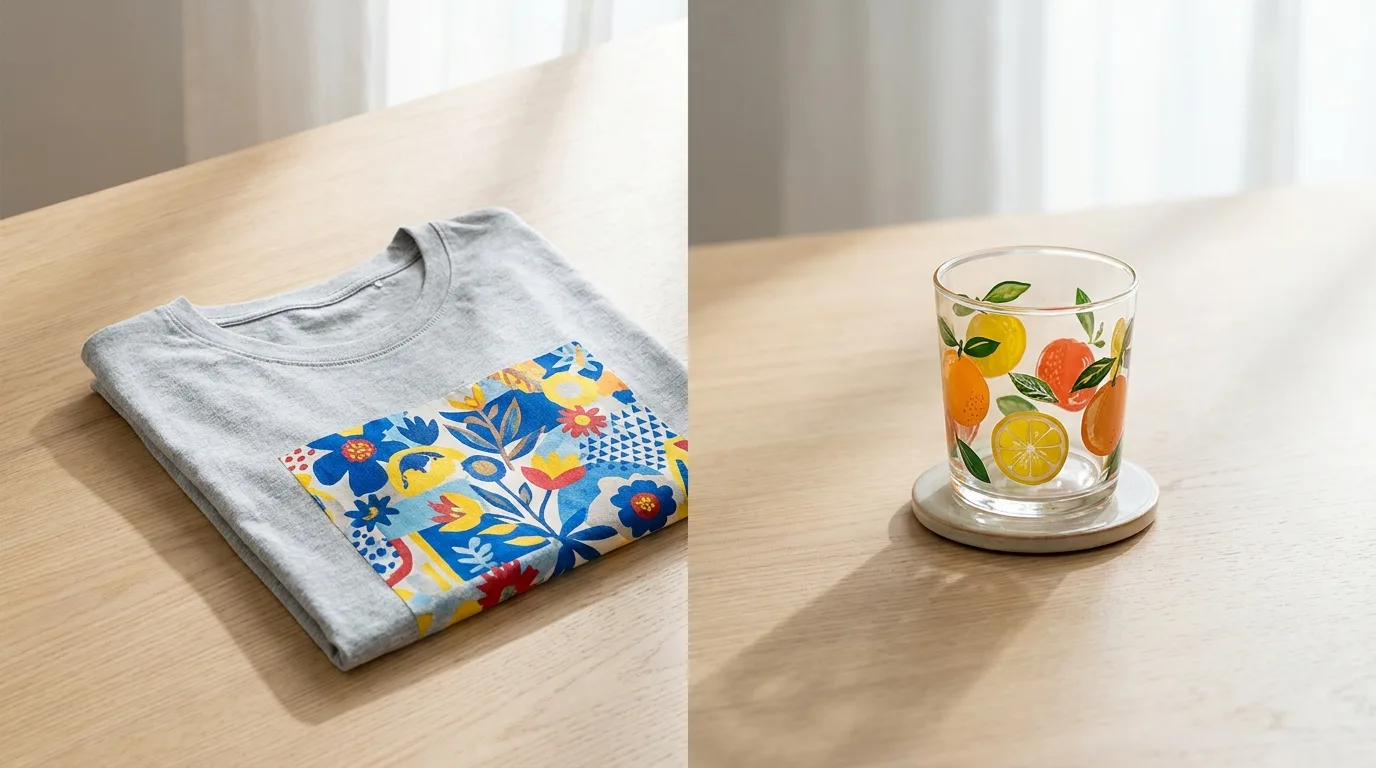
If you are deciding between transfer methods, understanding UV DTF vs DTF is the key to choosing the right one for your project. While the names look nearly identical, these two technologies serve completely different purposes: one is built for fabric, the other for hard surfaces. In this guide, we break down the differences so you can pick the perfect transfer every time and avoid the costly mistake of applying the wrong type to the wrong material.
UV DTF vs DTF: The Core Difference
The simplest way to remember it is this: regular DTF (direct-to-film) is for apparel and fabric, while UV DTF is for hard, smooth surfaces. Regular DTF transfers are applied with heat and pressure to shirts, hoodies, and tote bags. UV DTF stickers apply with pressure alone to items like tumblers, mugs, and phone cases.
Both start as designs printed onto film, but the ink, curing process, and application method differ significantly, which is why each excels at a different job. Confusing the two is the single most common beginner error, so anchoring on soft versus hard surfaces will steer you right almost every time.
How Each Process Works
Knowing the workflow for each helps clarify when to reach for one over the other.
Regular DTF
Regular DTF uses water-based pigment ink with a white underbase and a powdered adhesive. You place the transfer on fabric, then use a heat press to bond it permanently. The result is a soft, stretchy, washable print that moves with the garment. Because the adhesive melts into the fibers under heat, the bond becomes part of the fabric itself, which is why it survives the wash so well.
UV DTF
UV DTF uses UV-cured ink that hardens instantly under UV light, sealed with a protective layer. There is no heat involved. You peel, position, press, burnish, and remove the top film to leave a glossy, dimensional decal on a rigid surface. The cured ink sits on top of the surface as a tough, raised layer, giving it that signature premium texture you can feel.
UV DTF vs DTF: Materials and Surfaces
The biggest practical difference comes down to what you are decorating. Choosing the wrong method for your material is the most common mistake beginners make.
- Regular DTF works on: cotton, polyester, blends, canvas, and most fabrics for tees, hoodies, sweatshirts, and bags.
- UV DTF works on: glass, ceramic, metal, acrylic, hard plastic, and wood for tumblers, mugs, bottles, and cases.
- Heat: regular DTF requires a heat press; UV DTF requires none.
- Feel: DTF is flexible and soft on fabric; UV DTF is firm and glossy on hard goods.
For apparel projects, start with our DTF transfers by size. For hard-surface decals, browse UV DTF transfers by size.
Equipment and Startup Costs Compared
Cost of entry is another deciding factor, especially for newcomers. Regular DTF requires a heat press, which is a real investment, though presses have become more affordable and double as a tool for vinyl and sublimation too. UV DTF, by contrast, needs no machinery at all: your hands and a few minutes are the only requirements. That low barrier makes UV DTF an attractive starting point for crafters testing the waters, while apparel-focused sellers will quickly justify the cost of a press through the volume and durability of fabric prints.
- Regular DTF startup: heat press, a flat work surface, and basic protective sheets.
- UV DTF startup: essentially none beyond the transfers themselves and a clean cloth.
- Ongoing supplies: both simply require ordering new transfers as you sell.
Which One Should You Choose?
Your decision really comes down to the product you are making. If you sell shirts, hoodies, or tote bags, regular DTF is your method. If you create custom drinkware, mugs, or accessories, UV DTF is the way to go. Many sellers offer both to cover their full product range and capture customers shopping for either type of item.
Gang Sheets for Both
Good news: both methods support gang sheets so you can print many designs at once and save money. Apparel sellers can use the online gang sheet builder, while drinkware makers can lay out multiple decals with the UV DTF 3D gang sheets upload tool. Ganging your designs keeps your cost per piece low no matter which technology you are working with.
UV DTF vs DTF: Durability and Care
Regular DTF prints are machine washable and built to flex with fabric through hundreds of wash cycles when applied correctly. Turn garments inside out and wash cold to extend their life even further. UV DTF stickers are waterproof and scratch resistant on hard goods, though hand washing is recommended to maximize their lifespan. Both deliver vivid, long-lasting color when used on the right surface, and both will disappoint quickly if applied to the wrong one. The takeaway is that durability is never really about which method is tougher in the abstract, but about matching each transfer to the material it was engineered for. A regular DTF print on a shirt and a UV DTF decal on a tumbler will both reward you with years of service when you respect their strengths and follow the simple care steps above.
Frequently Asked Questions
Can I use UV DTF on a t-shirt?
No. UV DTF is designed for hard, smooth surfaces and will not bond properly or flex with fabric. For shirts and other apparel, use regular DTF transfers applied with a heat press.
Does UV DTF require a heat press like regular DTF?
No. Regular DTF needs heat and pressure from a press, while UV DTF applies with pressure alone. You simply peel, press, burnish, and remove the film, with no heat involved.
Which lasts longer, UV DTF or DTF?
Both are highly durable on their intended surfaces. Regular DTF withstands repeated machine washing on fabric, while UV DTF resists water and scratches on hard goods, especially with gentle hand washing.
Is one cheaper to get started with?
UV DTF has the lower barrier to entry because it needs no equipment. Regular DTF requires a heat press, but that investment pays off quickly for anyone focused on selling apparel in volume.
Can I order both types on gang sheets?
Yes. Both regular DTF and UV DTF support gang sheets, letting you print many designs on one sheet and keep your cost per transfer low for fabric and hard-surface projects alike.
Will regular DTF work on a mug or tumbler?
No. Regular DTF relies on heat bonding into fabric fibers and will not adhere to glass, ceramic, or metal. Use UV DTF for any hard, smooth drinkware surface.
Whether you are decorating apparel or drinkware, get the perfect transfer for the job from Mr Beat Print Studio and start creating today. Explore everything in our catalog and find more guides on the blog.