
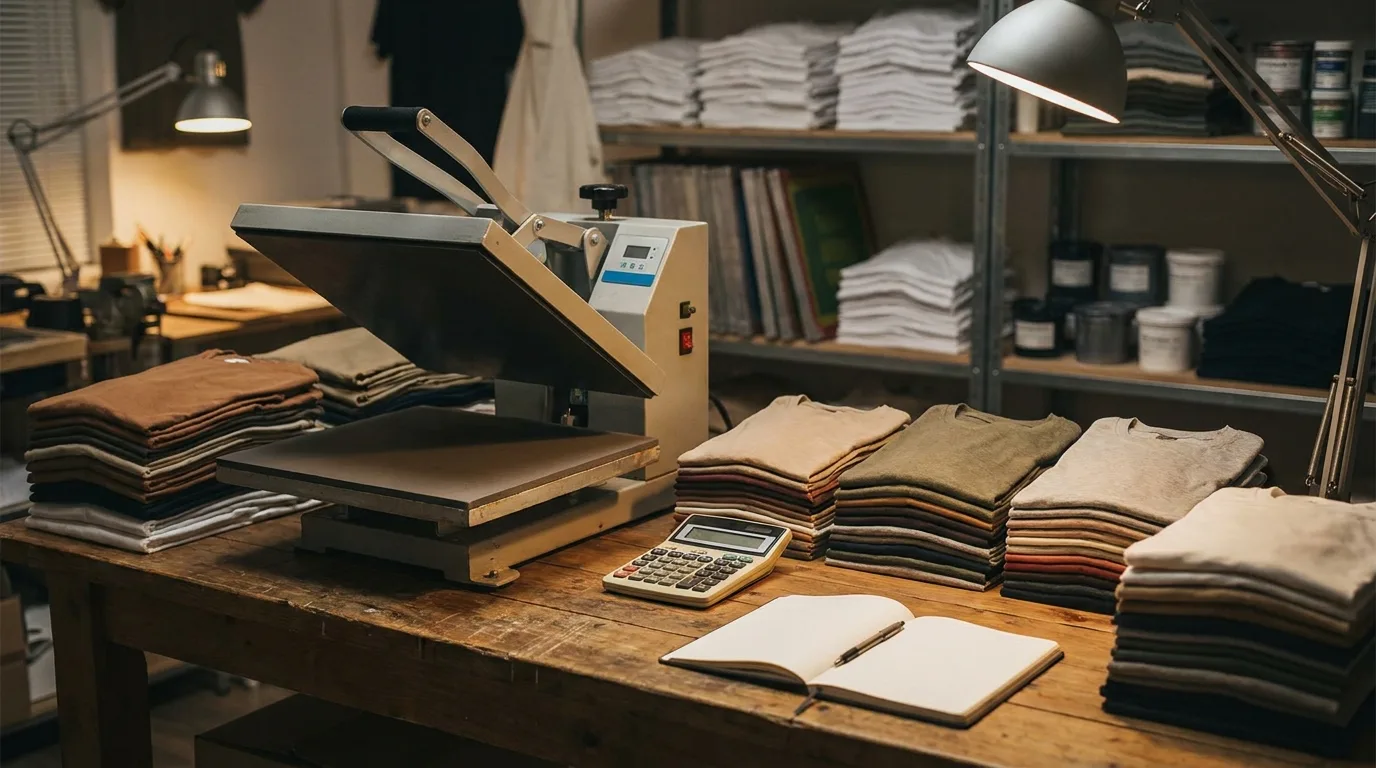
Healthy t-shirt business profit margins are the difference between a hobby and a thriving company. Plenty of new shop owners stay busy printing shirts yet barely break even because they never run the numbers. In this guide, we'll break down exactly where your money goes, how to price for profit, and the simple levers that can push your custom apparel margins from thin to fat. Understanding your numbers isn't the glamorous part of running a print shop, but it's the part that decides whether you're still in business next year.
Understanding T-Shirt Business Profit Margins
Profit margin is the percentage of each sale you keep after costs. In the custom t-shirt business, your costs include the blank garment, the print (DTF film, ink, or screens), labor, packaging, and overhead like rent and equipment. Knowing your true cost per shirt is step one, because you can't price for profit if you don't know what each piece costs to make.
A typical custom tee might cost a few dollars for the blank and a couple more to decorate. If you sell it for $25, you could be looking at a 60 to 70 percent gross margin, but only if you've accounted for every hidden cost. Gross margin pays your bills and funds your growth, so even a few points of improvement on each shirt compounds into serious money across a year of orders.
Gross Margin vs. Net Profit: Know the Difference
It's easy to celebrate a high gross margin and still end the month in the red. Gross margin is what's left after the direct cost of making each shirt, but net profit is what remains after every expense, including rent, software subscriptions, marketing, fees, and your own time. A shop can post a healthy 65 percent gross margin and still lose money if overhead and unpaid labor aren't tracked. Get in the habit of reviewing both numbers monthly. Gross margin tells you whether your pricing and production are sound; net profit tells you whether the whole business is actually working. Watching both keeps you from being busy and broke at the same time.
Calculating Your True Cost Per Shirt
Many shops underprice because they forget the small expenses that add up. Build a complete cost sheet for every product so your pricing reflects reality.
- Blank cost: The wholesale price of the garment itself.
- Print cost: DTF film, ink, transfer sheets, or screen setup.
- Labor: Time to press, fold, and package each shirt.
- Packaging and shipping: Mailers, labels, and postage.
- Overhead: A share of rent, utilities, and equipment.
- Transaction fees: Payment processing and marketplace cuts on each sale.
Buying smarter on blanks is the easiest lever to pull. Stocking up on affordable staples from the Mr Beat blank apparel catalog lowers your base cost on every order and instantly widens your margins.
Pricing Strategies That Protect Your Margins
Once you know your costs, set prices that leave room for profit and growth. A common approach is to multiply your total cost per shirt by 2.5 to 4, depending on your market and brand positioning. Premium, branded apparel can command higher multiples than basic promotional tees. Don't forget to price in a buffer for the occasional reprint, return, or shipping surprise, because those small losses are part of doing business and your pricing should quietly cover them.
Don't Compete on Price Alone
Racing to the bottom on price destroys margins fast. Instead, compete on quality, design, turnaround, and customer experience. A soft, well-printed unisex classic tee with great branding justifies a higher price than a generic shirt, and customers will gladly pay it. When you sell on value rather than the lowest number, you attract better customers and protect the profit you've worked to build.
Cutting Costs Without Cutting Quality
The fastest way to grow margins is to reduce your cost per print without sacrificing the finished product. DTF gang sheets are a game-changer here, you fit multiple designs onto a single sheet and slash your per-design cost. Use our gang sheet builder to pack your film efficiently and stop wasting material on half-empty sheets.
- Batch your printing: Group orders to minimize setup and waste.
- Buy blanks in bulk: Hit volume price tiers on staples.
- Reduce reprints: Quality control prevents costly do-overs.
- Maximize gang sheets: Fill every inch of film with usable designs.
Boosting Profit With Higher-Margin Products
Not all products carry the same margin. Diversifying into higher-value items can lift your average profit dramatically. Premium blank hoodies, embroidered caps, and bundled sets all command higher prices while taking similar effort to fulfill. Offering custom DTF transfers and gang sheets directly to other sellers also opens a recurring revenue stream with strong margins and minimal labor. The key is to lead customers toward these higher-value options through bundles, upsells, and well-photographed listings that make the upgrade feel like an easy yes.
Tracking Your Numbers and Improving Over Time
Profit isn't a set-it-and-forget-it figure, it shifts as your costs, suppliers, and product mix change. Build a simple monthly habit of reviewing your sales, your cost of goods, and your overhead so you always know where you stand. Spot your best-selling, highest-margin products and put more energy into promoting them. Watch for items that sell well but earn little, and either reprice them or phase them out. Even basic tracking in a spreadsheet will reveal patterns you can act on, and small adjustments made consistently are what gradually turn a slim-margin shop into a genuinely profitable one.
Frequently Asked Questions
What is a good profit margin for a custom t-shirt business?
Many custom apparel shops target a 50 to 70 percent gross margin on printed tees. Your exact margin depends on blank cost, print method, and pricing, but accounting for every expense is essential to hitting a healthy number.
How should I price my custom t-shirts?
Calculate your full cost per shirt, including blanks, printing, labor, packaging, and overhead, then multiply by 2.5 to 4. Premium, branded apparel can support higher multiples than basic promotional shirts.
How can I increase my t-shirt business profit margins?
Buy blanks in bulk, use gang sheets to lower your per-print cost, batch your production, and add higher-margin products like hoodies and embroidered items. Competing on quality rather than price also protects your margins.
Do gang sheets really improve margins?
Yes. Gang sheets let you print multiple designs on one transfer, dramatically cutting your cost per design and reducing wasted film, which directly boosts the profit on every shirt you print.
What's the difference between gross margin and net profit?
Gross margin is what's left after the direct cost of making a shirt. Net profit is what remains after every expense, including rent, fees, marketing, and your time. Both matter, so track them together.
How often should I review my pricing and costs?
Review your numbers monthly. Supplier prices, fees, and your product mix change over time, so regular check-ins help you adjust pricing, drop low-margin items, and protect your profit.
Want fatter margins on every shirt? Shop affordable blanks and cost-saving gang sheets at Mr Beat Print Studio and start printing for profit today.