
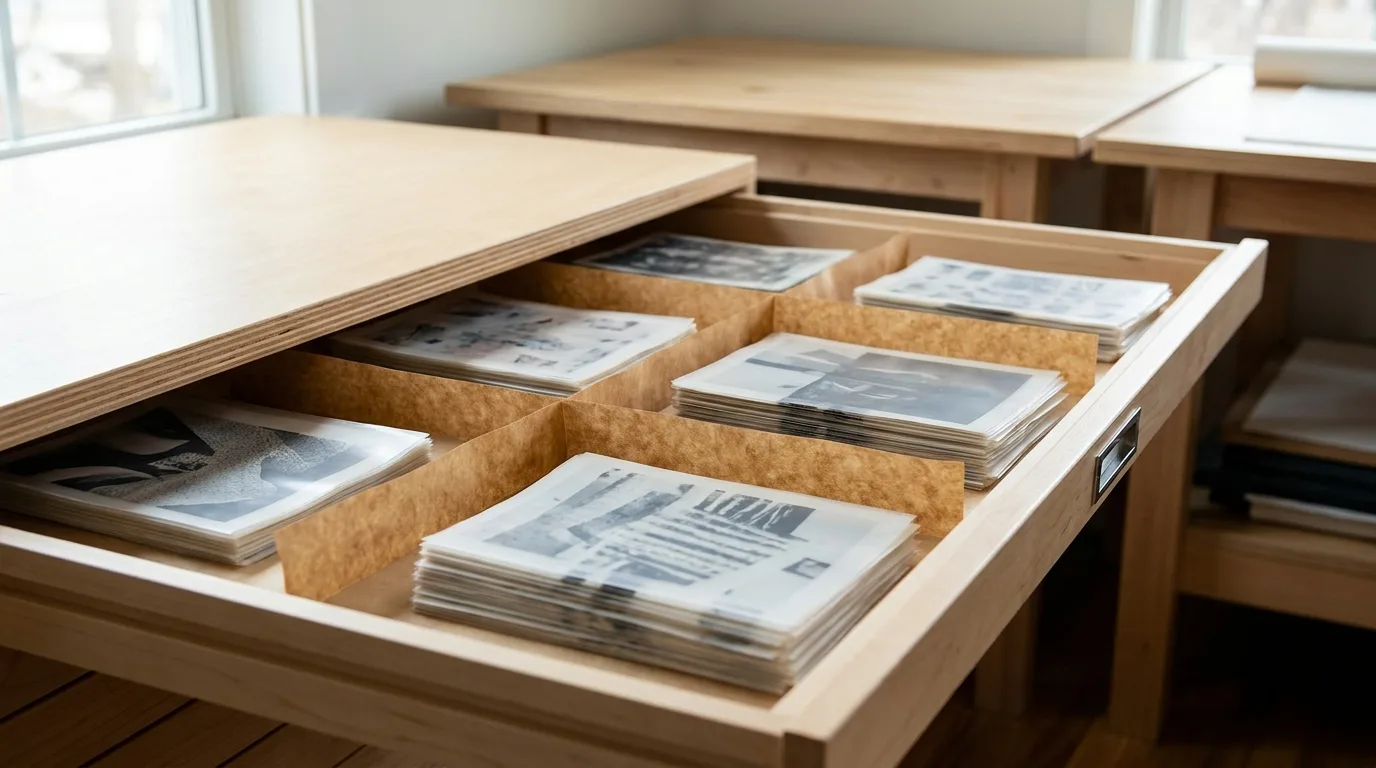
If you buy or print transfers in bulk, knowing how to store DTF transfers correctly protects your investment and keeps every design press-ready. Stored well, DTF transfers can last a year or more without losing adhesion or color. Stored poorly, they can curl, crack, or fail to bond. Here is everything you need to keep your stash in perfect shape, from the ideal room conditions to the containers that make the biggest difference.
Why Proper DTF Transfer Storage Matters
DTF transfers consist of printed ink and a layer of hot-melt adhesive powder bonded to a PET film. That adhesive is sensitive to heat, moisture, and UV light. Exposure to the wrong conditions can cause the powder to clump, the film to warp, or the ink to fade before you ever press it. Good storage habits preserve the chemistry of the transfer so it activates cleanly under your heat press, giving you crisp, durable prints on demand.
This is especially important for small businesses and print shops that stock transfers ahead of busy seasons. A failed press is not just one ruined sheet, it can mean a missed deadline, a wasted blank, and an unhappy customer. Treating your transfers like the perishable inventory they are will save you money over the long run.
The Ideal Storage Conditions for DTF Transfers
The three biggest enemies of stored transfers are heat, humidity, and sunlight. Aim to recreate a cool, dark, dry environment. A closet, drawer, or storage bin away from windows works perfectly.
- Temperature: Keep transfers between 60 and 75 degrees Fahrenheit. Avoid garages, attics, or anywhere prone to heat spikes.
- Humidity: Maintain low humidity, ideally under 50 percent, to prevent the adhesive from absorbing moisture.
- Light: Store away from direct sunlight and UV exposure to protect ink vibrancy.
- Position: Keep transfers flat or loosely rolled, never tightly folded or creased.
If your workspace tends to swing between hot and cold, consider a small interior room or interior closet that stays more stable. Rapid temperature changes are especially hard on the adhesive layer because they encourage condensation, which is the hidden culprit behind many storage failures.
Best Containers for Storing DTF Transfers
How you contain your transfers matters as much as where you keep them. The goal is to block light and moisture while preventing the sheets from sticking together or bending. Resealable opaque bags, acid-free folders, or flat archival boxes all work well. For larger quantities, stack sheets between parchment or silicone paper to keep adhesive surfaces from touching.
Smart Storage Supplies
- Resealable plastic bags: Block humidity and keep dust off the adhesive.
- Silica gel packets: Toss a few in your storage container to absorb excess moisture.
- Flat boxes or drawers: Prevent curling and protect against accidental creasing.
- Parchment dividers: Stop stacked transfers from fusing together in warm conditions.
If you order ready-made transfers, our DTF transfers by size ship flat and clean, making them easy to file away until you are ready to press. Keeping the original packaging is also a smart move, since it is designed to protect the print surface during shipping and works just as well in storage.
A Simple System to Organize Your Transfer Inventory
Storage is not just about preservation, it is about being able to find the right transfer fast. Label each bag or folder with the design name, size, and the date you received or printed it. Group transfers by customer, by project, or by season so you are not digging through a pile during a rush. A basic spreadsheet or even a notebook listing what you have on hand prevents accidental reorders and helps you spot which designs sell best. Many small shops adopt a first-in, first-out rotation, pulling the oldest stock to press first so nothing sits long enough to degrade. The few minutes you spend labeling pay off every time you fill an order without hunting.
How Long Do DTF Transfers Last in Storage?
When stored under ideal conditions, most DTF transfers stay press-ready for six months to a year, and often longer. The adhesive remains active and the ink stays vibrant throughout that window. Signs that a transfer has degraded include flaking powder, a cracked or curled film, faded color, or poor adhesion during pressing. If you notice any of these, run a test press before committing to a full order.
Rotating your stock so older transfers get used first is a simple way to avoid waste, just like managing inventory in any retail business. If you ever find a sheet that has clearly clumped or cracked, it is better to retire it than to risk a peeling print on a customer garment.
Storage Tips for Bulk and Gang Sheets
If you buy gang sheets to maximize value, store them rolled loosely with the printed side facing inward, or keep them flat in a wide drawer. Avoid tight rolls that can crack the design. For ongoing projects, our online gang sheet builder lets you order exactly what you need, reducing the amount of leftover film you have to store. Buying in smarter quantities means fresher transfers and less waste overall.
Master how to store DTF transfers and you will cut down on failed presses, save money, and keep your production line running smoothly. For more hands-on guidance, check out the rest of the Mr Beat Print Studio blog for pressing settings, fabric guides, and workflow tips.
Frequently Asked Questions
How long can DTF transfers be stored?
Properly stored DTF transfers typically last six months to a year or more. Keep them cool, dry, and out of sunlight, and run a test press if you are unsure about an older batch.
Can DTF transfers be stored in the refrigerator?
No. Refrigerators introduce condensation and humidity that can damage the adhesive. A cool, dry, room-temperature space like a drawer or closet is far better.
Do DTF transfers need to be kept out of sunlight?
Yes. UV light can fade the ink over time, so always store transfers in a dark container or drawer away from windows.
Why are my stored DTF transfers cracking?
Cracking usually comes from heat exposure, moisture, or being folded too tightly. Store them flat or loosely rolled in a cool, dry place to prevent this.
Should I use silica gel packets when storing transfers?
Yes, especially in humid climates. A few silica gel packets in your storage bin or bag absorb excess moisture and keep the adhesive from clumping, which extends shelf life.
Can I still use a transfer that has slightly curled?
Often yes. A mild curl from being rolled usually flattens under the press. However, if the curl is accompanied by flaking powder or cracking, run a test press first before using it on a customer order.
Stock up with confidence and order fresh, ready-to-press transfers from Mr Beat Print Studio today.