
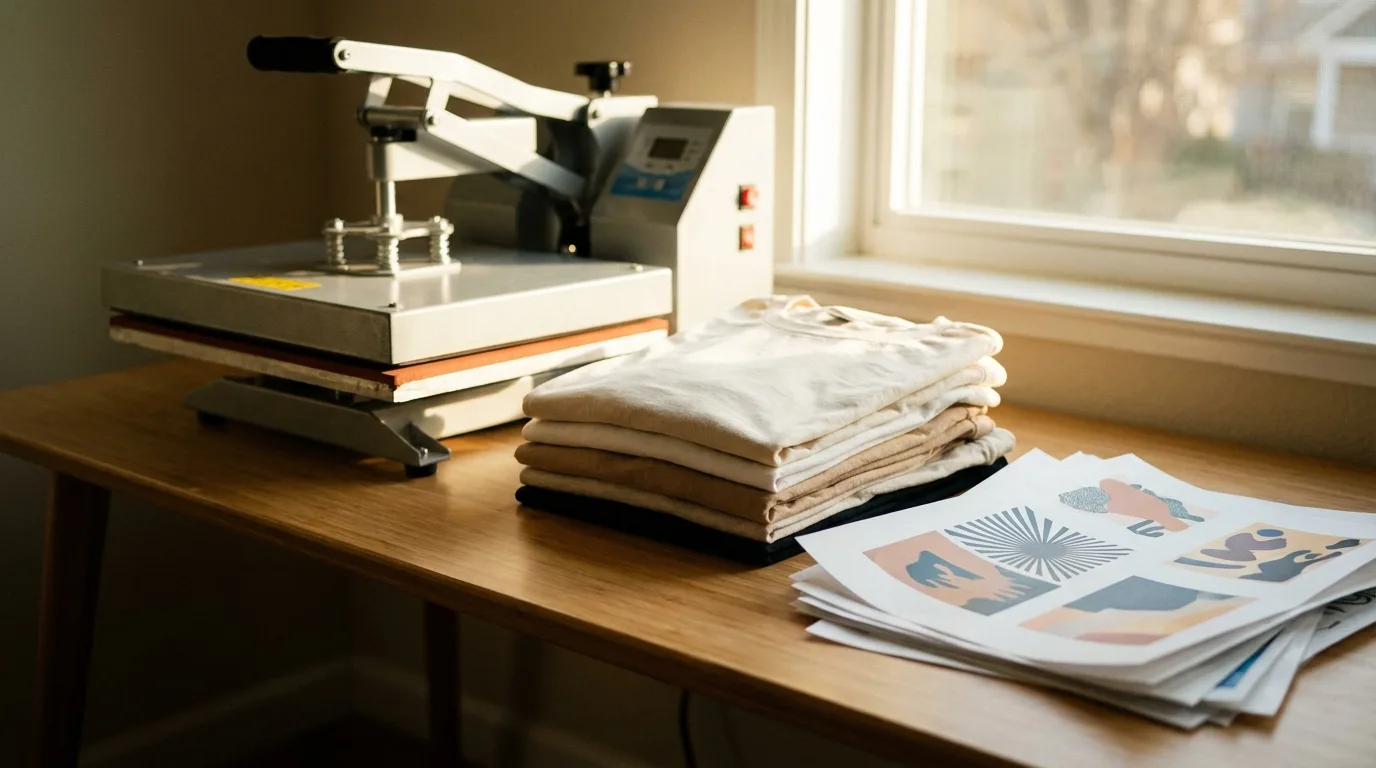
If you want to start a t-shirt business from home, the good news is that you can launch with a small space, a modest budget, and a lot of creativity. Whether you print yourself or partner with a supplier, a home-based tee brand is one of the most flexible side hustles out there. This guide breaks down exactly how to go from idea to your first sale, and it covers the real-world details that help you avoid the common pitfalls that stall new sellers in their first month.
Decide How You Will Print Your Shirts
Your printing method shapes your costs, quality, and how many designs you can offer. From a home setup, the most popular options are heat-pressing DTF transfers, which let you print full-color designs onto cotton and blends with a simple press. Many home sellers love DTF because it is beginner-friendly and works on small batches. Explore ready-to-press options like our DTF transfers by size to test designs without buying expensive equipment.
- DTF transfers: vivid color, soft hand feel, great for small runs.
- Print on demand: zero equipment, a supplier prints and ships for you.
- Screen printing: low cost per shirt at high volume, more setup.
For most people starting a t-shirt business from home, DTF transfers strike the best balance. You can press a single shirt for a custom order or a dozen for a small wholesale run, and you are not locked into ordering hundreds of the same design like you would be with traditional screen printing. That flexibility lets you test ideas cheaply and only scale the ones that sell.
Choose the Right Blank T-Shirts
The blank you choose is just as important as the artwork. A scratchy or poorly fitting shirt leads to refunds and bad reviews, while a soft, durable tee earns repeat customers. Order samples and wash-test them before committing. A dependable unisex classic tee gives you a flattering fit across body types and holds prints beautifully wash after wash. Pay attention to fabric weight, shrinkage after washing, and how evenly the color is dyed, because these details show up the moment your customer pulls the shirt out of the package.
Set Up Your Home Workspace
You do not need a warehouse to start a t-shirt business. A corner of a room can hold everything you need to fulfill orders neatly and efficiently.
- Pressing area: a heat press, a heat-safe surface, and good ventilation.
- Storage: shelving for blanks, transfers, and packaging.
- Shipping station: poly mailers, a scale, and a printer for labels.
- Photo spot: a clean backdrop and natural light for product shots.
Keep your workflow in mind when you arrange the space. Set things up so a shirt moves naturally from storage, to pressing, to packing, to shipping without crisscrossing the room. A tidy, logical layout saves minutes on every order, and those minutes add up fast once you are pressing several shirts a day.
Build Your Brand and Online Store
Customers buy from brands they trust. Pick a clear name, design a simple logo, and use consistent colors and fonts across your packaging and store. Decide where you will sell: a marketplace for built-in traffic, your own site for control, or both. Write product titles and descriptions that name the shirt, the audience, and the benefit so shoppers know exactly what they are getting. A small touch like branded tissue paper or a thank-you card turns an ordinary unboxing into a moment customers want to share.
Price Your T-Shirts for Profit
Profit comes from pricing with intention. Total your blank cost, transfer or print cost, packaging, shipping, and platform fees, then add a margin that pays you for your time. Most home tee sellers price standard shirts to keep a 40 to 60 percent margin. Offer bundles and limited designs to raise perceived value rather than competing only on price. Do not forget to value your own labor, because the time you spend pressing and packing is a real cost even when it does not leave your bank account.
Handle Orders, Shipping, and Customer Care
Smooth operations protect the reviews that grow a home business. Set realistic processing times and stick to them, weigh your packages so postage is accurate, and send tracking as soon as an order ships. When a question or problem comes up, reply quickly and fix it generously, because a well-handled issue often earns a more loyal customer than a flawless order. Keeping a simple spreadsheet of orders, costs, and shipping dates helps you stay organized as volume grows.
Market Your Home T-Shirt Business
Marketing is what turns a hobby into a business. Show your process, your designs, and happy customers wherever your audience hangs out online.
- Short video: film pressing, packing, and design reveals.
- Niche groups: participate genuinely in communities that match your designs.
- Email and SMS: reward sign-ups and announce new drops.
- Reviews: request photos from buyers to build trust.
For seasonal design ideas and selling tips, browse the Mr Beat Print Studio blog and keep a running list of concepts to test.
Frequently Asked Questions
How much does it cost to start a t-shirt business from home?
With print on demand you can start for a couple hundred dollars. If you press DTF yourself, budget for a heat press, blanks, and transfers, which can still keep startup costs modest while giving you better margins.
Do I need a heat press to sell t-shirts?
No. You can use print on demand and skip equipment entirely. A heat press is only needed if you want to press DTF transfers yourself for more control and better margins.
How many designs should I launch with?
Start with five to ten focused designs in one niche. A tight, themed collection is easier to market than a scattered catalog and helps you learn what your audience loves.
Is a t-shirt business profitable?
It can be very profitable when you choose a clear niche, use quality blanks, and price for healthy margins. Repeat customers and bundles boost long-term earnings.
What is the best printing method for beginners at home?
DTF transfers are ideal for most beginners because they deliver full-color, durable prints on a wide range of fabrics with a simple heat press and no minimum order quantity.
How do I get my first customers?
Start with the communities you already belong to, post your designs as short videos, and offer a small launch discount. Word of mouth and photo reviews build momentum quickly.
Turn your spare room into a thriving brand with premium blanks and ready-to-press transfers from Mr Beat Print Studio, your one-stop shop for home apparel printing.