
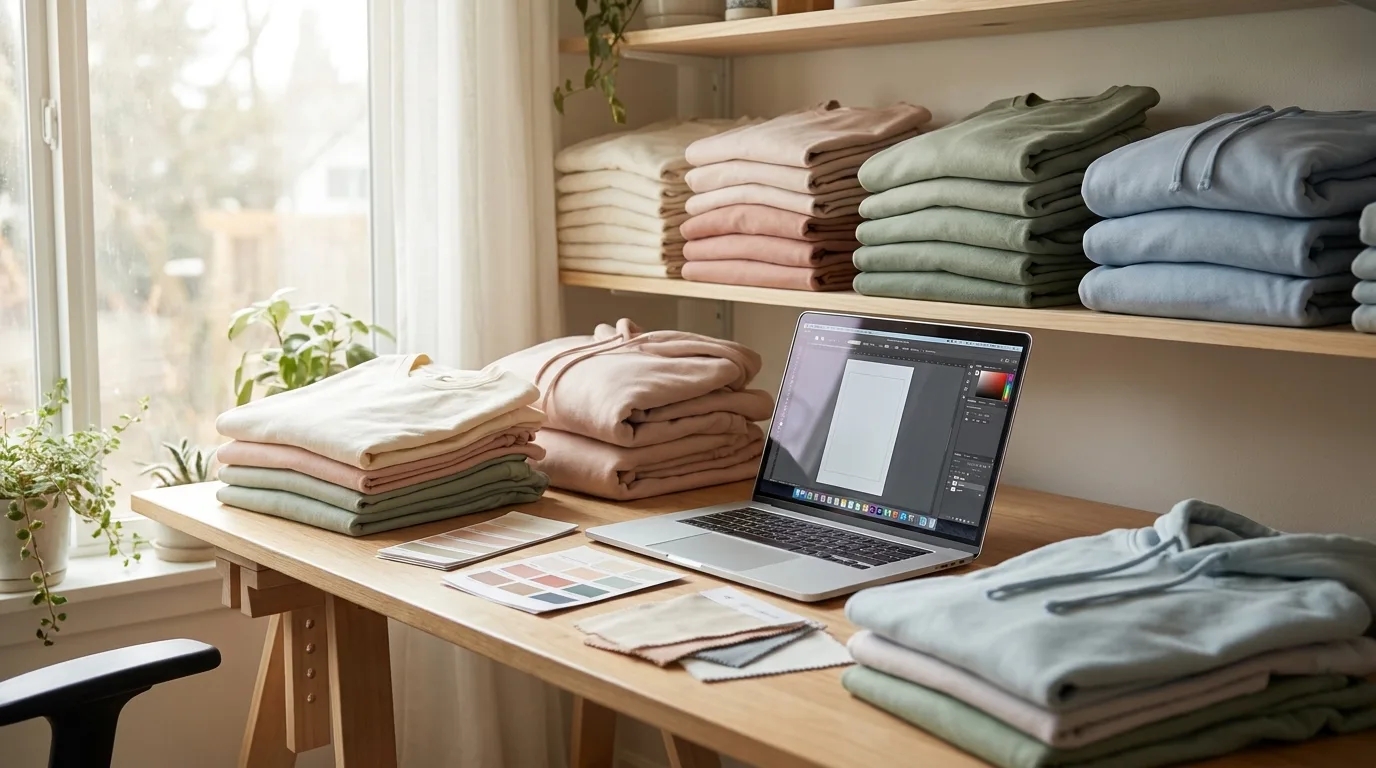
Learning how to start a print on demand business in 2026 is one of the most accessible ways to build a real brand with very little upfront cash. You design products, customers order, and your supplier prints and ships, so you never hold inventory. In this guide we will walk through every step you need to launch, from picking a niche to landing your first sales, and we will share the practical details most beginner guides skip so you can move faster and avoid expensive mistakes.
What It Really Means to Start a Print on Demand Business
Print on demand (POD) is a fulfillment model where products are created only after a customer places an order. That means no garage full of unsold shirts and no big risk if a design flops. When you start a print on demand business, your main jobs become design, branding, and marketing, while production and shipping happen behind the scenes. The trade-off is slightly lower margins per item, but the freedom to test dozens of ideas quickly more than makes up for it. Because there is no inventory tying up your cash, you can pivot the moment data tells you a niche or design is working, which is a huge advantage over traditional retail.
It also helps to understand the two main paths within POD. The first is fully automated fulfillment, where a partner prints and ships every order without you touching a thing. The second is a hybrid model where you stock blanks and press designs yourself using DTF transfers, which gives you better margins and faster turnaround. Many successful sellers begin fully automated to validate demand, then bring printing in-house once the orders justify the equipment. Knowing both options exist lets you choose the right starting point for your budget and goals.
Choose a Profitable Niche and Audience
The biggest mistake new sellers make is trying to appeal to everyone. A tight niche helps you stand out, write better copy, and run cheaper ads. Look for communities that love wearing their identity, such as hobbies, professions, pets, or local pride.
- Passion-driven: fishing, gaming, gardening, or running clubs.
- Profession-based: nurses, teachers, electricians, and chefs.
- Life moments: new parents, graduations, weddings, and reunions.
- Local and regional: small-town pride and hometown sports.
Validate demand before you design. Browse marketplaces, check search trends, and read what people complain about in existing products so your version can be better. A great niche has passionate buyers, repeat purchase potential, and enough search volume to sustain sales, but not so much competition that established brands dominate every keyword. Aim for the sweet spot where demand is real but the field is still wide open for a focused newcomer.
Pick Your Products and a Reliable Supplier
Your product line and your supplier make or break the customer experience. Start with proven sellers like tees, hoodies, and tote bags, then expand. A soft, well-fitting blank is the foundation of every great print, so test garments before you commit. Browse our full range on the Mr Beat Print Studio catalog to compare blanks and print options.
- Apparel: a reliable unisex classic tee and a cozy blank unisex hoodie built for printing.
- Accessories: mugs, tumblers, caps, and a durable cotton canvas tote bag.
- Transfers: DTF transfers and gang sheets if you want to press in-house.
Always order samples before listing anything for sale. Wash-test the garments, feel the fabric weight, and check how the print holds up after several cycles. Your customers will judge your brand on that first wear, so a few dollars spent on samples now saves you from refunds and bad reviews later.
Set Up Your Store and Branding
You can sell on a marketplace, your own site, or both. A self-hosted store gives you control over branding, email lists, and margins, while marketplaces give you built-in traffic. Whichever you choose, invest in a memorable name, a clean logo, and consistent product photos. Write clear titles and descriptions that name the product, the audience, and the benefit so shoppers and search engines both understand what you sell. Consistency across your packaging, social profiles, and store builds the kind of trust that turns one-time buyers into loyal fans.
Price for Profit, Not Just Sales
Many beginners price too low out of fear. Add up your base cost, fees, shipping, and packaging, then build in a margin that pays you fairly for design and marketing time. Aim for at least a 30 to 50 percent profit margin on apparel. Bundle items, offer free shipping thresholds, and create limited drops to raise perceived value instead of racing to the bottom on price. Remember that ad costs come out of your margin too, so leave enough room to acquire customers profitably and still take home a real return.
Plan Your Daily Operations and Customer Service
Behind every smooth-running POD brand is a simple set of systems. Decide how you will handle order confirmations, track production times, and respond to questions quickly. Even with automated fulfillment, customers will email about sizing, shipping delays, and design tweaks, and how fast you reply shapes your reviews. Create a short template library for common questions, set clear processing expectations on your store, and check orders daily. Treating service as a core part of the business, not an afterthought, is what separates hobby shops from brands that grow.
Market Your Print on Demand Brand
Launching the store is the easy part; getting traffic is the real work. Combine free and paid channels so you are never dependent on a single platform.
- Content: short videos showing designs, behind-the-scenes printing, and styling tips.
- Social proof: ask buyers for photo reviews and feature them.
- Email: capture sign-ups with a small discount and nurture repeat buyers.
- Paid ads: start with small budgets, test creatives, and scale winners.
For more launch tactics and seasonal ideas, explore the Mr Beat Print Studio blog where we share practical guides for new sellers.
Frequently Asked Questions
How much money do I need to start a print on demand business?
You can start for under a few hundred dollars since there is no inventory. Budget for sample products, a domain or store subscription, and a small testing budget for ads or content. Reinvesting your early profits is the safest way to grow without going into debt.
Is print on demand still profitable in 2026?
Yes. Demand for custom apparel keeps growing, and sellers who pick a focused niche, control quality, and price for healthy margins can build sustainable, profitable brands. The winners are those who treat it like a real business rather than a quick scheme.
What products sell best for beginners?
T-shirts, hoodies, tote bags, and mugs remain reliable bestsellers because they have broad appeal, easy sizing, and strong perceived value when paired with great designs.
Do I need design skills to start?
Not necessarily. Many sellers use simple text-based designs, templates, or hire freelance designers. Clear, on-niche concepts often outperform highly complex artwork.
How long does it take to get my first sale?
With focused marketing, many sellers see their first sale within a few weeks. Building steady, repeatable traffic usually takes a few months of consistent content, testing, and listing improvements.
Should I press my own products or use automated fulfillment?
Start with whichever fits your budget. Automated fulfillment is hands-off and great for validating ideas, while pressing DTF transfers yourself improves margins and quality once your order volume grows.
Ready to launch? Stock up on premium blanks and print-ready supplies at Mr Beat Print Studio and turn your designs into a profitable brand today.