A great custom hoodie starts with a great blank. Choosing the right blank hoodie for printing affects everything from how your design looks to how warm, durable, and sellable the final product is. This guide walks you through fabric, weight, fit, and print compatibility so you can pick hoodies your customers will love and reorder. Get the blank right and the rest of your process gets easier, from pressing to packing to that all-important first impression when the package arrives.
Why the Right Blank Hoodie Matters
The blank is your foundation. A thin, scratchy hoodie with a poor print surface will undercut even the best design, while a quality blank makes your artwork pop and feel premium. For print shops and POD sellers, the right blank hoodie for printing means fewer returns, better reviews, and higher repeat orders. It is worth getting this decision right before you commit to a bulk run.
Remember that a hoodie is a higher-ticket item than a tee, so customer expectations are higher too. People are willing to pay more, but they also notice cheap fabric, sloppy seams, and prints that crack after two washes. Choosing a solid blank protects your reputation and your margins at the same time.
Fabric Weight and Blend
Hoodie fabric is measured in ounces per square yard, and weight drives both warmth and feel. Lighter hoodies (around 7 to 8 oz) are breathable and great for milder climates or layering, while heavier hoodies (9 to 12 oz) feel cozy, premium, and built to last.
- Cotton-rich blends: Softer surface, excellent for DTF and screen printing.
- Cotton-poly fleece: Durable, warm, and resistant to shrinking.
- Heavyweight fleece: Premium hand feel that justifies higher pricing.
- Ringspun cotton face: Smoother surface that captures fine print detail.
A balanced cotton-poly fleece is the most popular choice because it prints well, stays soft, and survives many washes. Explore options like our blank unisex hoodie for printing built specifically for custom work.
Fit and Style Options
Fit shapes how your hoodie sells. A classic unisex pullover suits the widest audience, while oversized and drop-shoulder cuts appeal to streetwear and fashion buyers. Consider your customer: a school fundraiser wants comfortable, inclusive sizing, while a clothing brand may want a trendier silhouette.
Also decide between pullover and zip-up. Pullovers offer a larger uninterrupted print area on the front, which is ideal for big chest or full-front designs. If you want a step up in feel and finish, the premium blank hoodies deliver a heavier, more luxurious result. Keep in mind that zip-ups split the front panel, so they suit smaller left-chest logos rather than large centered graphics.
Print Surface and Method Compatibility
Different print methods need different surfaces. Flat, tightly knit fleece works best for DTF transfers and screen printing because it holds detail and resists cracking. For embroidery, a denser, more stable fabric prevents puckering and keeps stitches crisp.
Avoid heavily textured or pilled surfaces, which scatter ink and reduce detail. If you plan to offer DTF, check that the fabric tolerates the heat and pressure of the process. Many sellers test one or two blanks before committing to a large order, and that small step saves a lot of headaches. For step-by-step pressing advice on fleece, the tutorials on our printing blog are a helpful starting point.
Colors, Sizing, and Inventory Planning
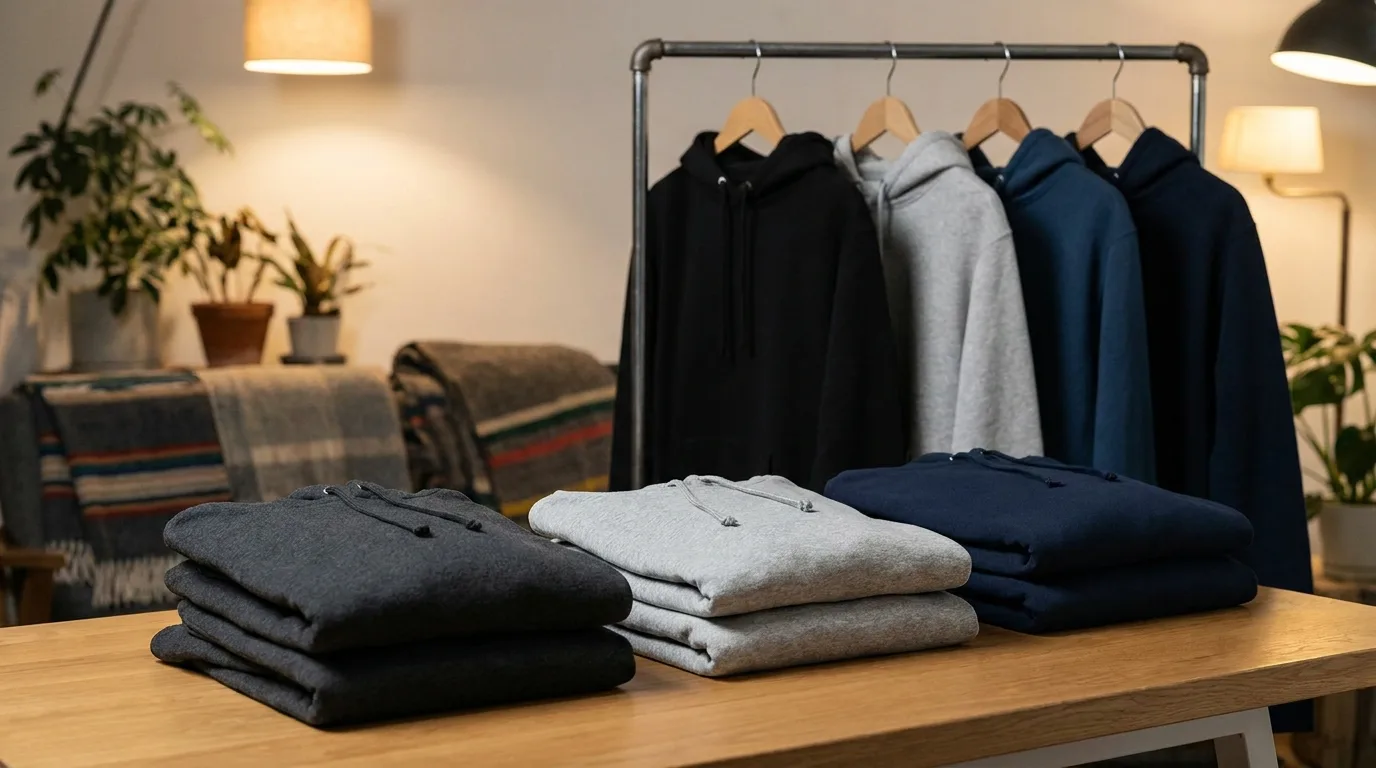
Stock the colors your market actually buys. Black, charcoal, navy, and heather gray are reliable best-sellers, while seasonal and trend colors can boost limited drops. Make sure your chosen blank comes in a full size range, ideally from small through 3XL or larger, so you never turn away a customer.
Plan inventory around your most popular size-color combos rather than buying one of everything. This keeps cash flow healthy and reduces dead stock. You can compare hoodie styles, weights, and colors in our blank apparel catalog.
Decoration Placement and Sizing Your Artwork
Where you place a design matters as much as how you print it. A standard front print sits a few inches below the collar and centered on the chest, while oversized streetwear graphics may run nearly seam to seam. Back prints, sleeve hits, and hood prints add value and let you charge more for a complete look.
Size your artwork to the garment, not the other way around. A logo that looks great on a small can feel lost on a 3XL, so consider scaling designs proportionally across the size run. Taking the time to map placement before a bulk press keeps every hoodie looking intentional and professional, which is exactly what earns reorders.
Matching the Hoodie to Your Brand
Finally, align the blank with your brand promise. A premium streetwear label should choose heavyweight, fashion-fit fleece, while a budget-focused merch business may prioritize affordable mid-weight hoodies. The right blank reinforces your pricing and keeps customers coming back. When the hoodie feels as good as the design looks, you have a product worth reordering.
Think of the blank as part of your branding, not just a canvas. The weight, the drawcord, the cuffs, and the fit all tell the customer what kind of company you are. Choose deliberately and your hoodies will do quiet marketing every time someone wears one in public.
Frequently Asked Questions
What weight is best for a blank hoodie for printing?
A mid-to-heavy weight of around 8 to 10 oz is ideal for most custom work. It feels premium, prints cleanly, and holds up well through repeated washing.
Is cotton or cotton-poly better for printing hoodies?
Cotton-poly fleece is usually best. It offers a smooth, print-friendly surface, resists shrinking, stays soft, and balances warmth with durability for DTF and screen printing.
Should I choose pullover or zip-up hoodies for printing?
Pullovers give a larger, uninterrupted front print area, making them ideal for big designs. Zip-ups suit smaller logos and a more versatile, everyday style.
Can blank hoodies be embroidered as well as printed?
Yes. Choose a denser, stable fabric for embroidery to keep stitches crisp and prevent puckering. Many blanks work well for both DTF printing and embroidery.
How many colors and sizes should I stock to start?
Begin with three or four proven colors like black, navy, and heather gray across a full size range, then expand into trend colors once you see which combinations sell fastest.
Do heavier hoodies really sell for more?
Often, yes. A substantial, premium hand feel signals quality and justifies a higher price, especially for streetwear and brand-focused buyers who value a luxurious, durable garment.
Ready to find the perfect canvas for your designs? Shop our blank hoodies for printing at Mr Beat Print Studio and create custom apparel that sells.