
Choosing the right DTF printing business equipment can make or break your startup budget. Direct-to-film printing has exploded in popularity because it produces vivid, durable, full-color transfers on almost any fabric, but the gear involved ranges from affordable to seriously expensive. In this guide, we'll walk through everything you need to start a DTF business, and reveal a smarter, lower-risk path that skips the heavy equipment entirely. By the end, you'll be able to choose the route that fits your budget, your space, and your goals.
The Core DTF Printing Business Equipment
A full in-house DTF setup involves several specialized machines working together. Each plays a role in turning a digital design into a press-ready transfer that bonds permanently to fabric. Here's the essential lineup:
- DTF printer: A modified inkjet printer that uses special CMYK plus white ink to print designs onto film.
- Powder shaker and curing unit: Applies and melts adhesive powder onto the wet ink so transfers stick.
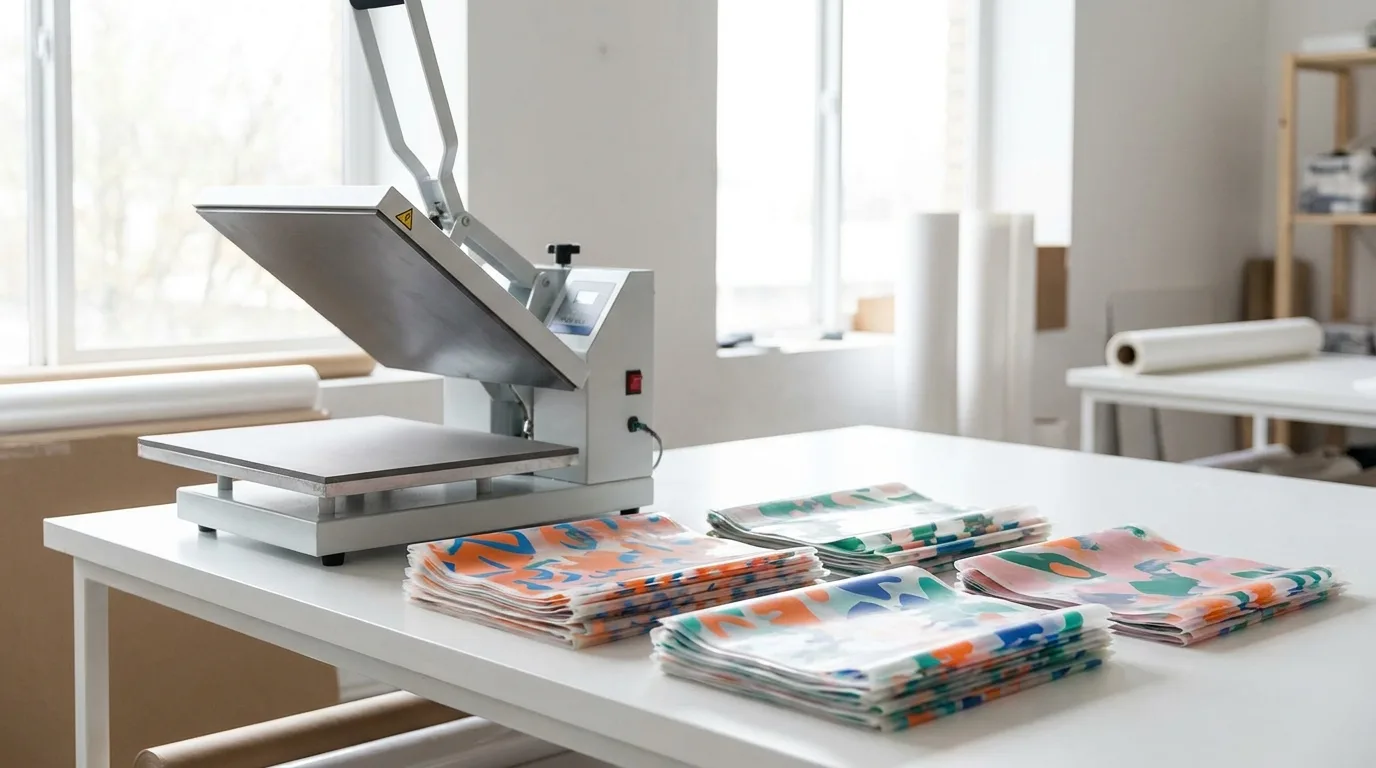
- Heat press: Bonds the finished transfer to your garment with heat and pressure.
- RIP software: Controls color, white ink layers, and print quality.
- DTF film and ink: Consumables you'll restock regularly.
Together, this equipment can run anywhere from a few thousand to tens of thousands of dollars, plus ongoing maintenance and a real learning curve. None of it is plug-and-play, and each machine adds another thing that can break, clog, or need recalibration.
Understanding the Real Cost of an In-House Setup
The printer is only the beginning. DTF inks require regular use to prevent clogging, white ink especially needs constant agitation and maintenance. You'll also need ventilation for powder, space for curing, and time to dial in color profiles. For many new businesses, the upfront investment and maintenance burden are bigger hurdles than expected. The machines don't just cost money to buy, they cost time and attention to keep running, and that time is taken straight from selling and growing your brand.
Hidden Costs to Budget For
Beyond machines, factor in consumables, replacement parts, electricity, and the hours you'll spend troubleshooting. A clogged printhead or a bad batch of film can stall production and eat into profits before you've made your first sale. Many first-time owners underestimate how much of their week disappears into maintenance, and that lost time has a real dollar value too.
The Learning Curve Nobody Warns You About
Owning the equipment is one thing; mastering it is another. Producing consistent, vibrant DTF transfers takes practice with color management, powder application, cure temperatures, and press settings. Early on, you'll likely waste film, ink, and garments while you learn what good output looks like and how to repeat it. That trial-and-error period can stretch for weeks and quietly drains both materials and morale. There's nothing wrong with learning the craft, but it's worth knowing up front that the gear alone won't deliver clean prints, your skill will, and skill takes time to build. Many sellers prefer to skip that ramp-up entirely and start with transfers that are already dialed in.
A Smarter Path: Skip the Equipment
Here's the good news, you don't need any of that equipment to start selling DTF prints. Ordering ready-to-press transfers lets you launch immediately with nothing but a heat press, or even outsource pressing too. You get professional, consistent transfers without the maintenance, mess, or massive upfront cost. That means you can take your idea to market this week instead of months from now after a steep equipment investment.
You can order custom transfers in any size from our DTF transfers by size page, or pack multiple designs onto one sheet with the online gang sheet builder. Already have artwork laid out? Just upload your gang sheet and we'll print it. Browse the full Mr Beat catalog to see how easy starting can be.
What You Actually Need to Get Started
If you go the smart, outsourced route, your shopping list shrinks dramatically. Here's the minimal kit to begin pressing professional DTF transfers:
- A quality heat press: The one piece of gear worth investing in early.
- Ready-to-press DTF transfers: Ordered in the sizes and quantities you need.
- Blank apparel: Tees, hoodies, and accessories to print on.
- Basic workspace: A clean, flat surface and a heat-safe area.
Scaling Up When You're Ready
The beauty of starting with outsourced transfers is that you prove your business before buying machines. Once your order volume justifies the investment, you can bring printing in-house with confidence, knowing your designs sell. Until then, every dollar you save on equipment is a dollar you can put toward marketing, inventory, and growth. By the time you do buy a printer, you'll understand your costs, your bestsellers, and your customers, which makes the investment far less risky than guessing on day one.
When you do scale up, plan the transition carefully rather than buying everything at once. Start by tracking how many transfers you outsource each month and what they cost, then compare that against the full price of a printer, curing unit, powder station, software, and the maintenance time involved. Only when in-house production clearly beats outsourcing on both cost and reliability does it make sense to bring it under your roof. Even then, many growing shops keep ordering transfers and gang sheets for overflow, rush jobs, and specialty work, so they're never bottlenecked by a single machine. Outsourcing and owning equipment aren't either-or choices, the smartest operations use both to stay flexible.
Frequently Asked Questions
What DTF printing business equipment do I really need to start?
For a full in-house setup, you need a DTF printer, powder shaker, curing unit, heat press, RIP software, and consumables. But you can start with just a heat press by ordering ready-to-press transfers, which avoids the biggest costs entirely.
How much does DTF equipment cost?
A complete in-house DTF setup ranges from a few thousand to tens of thousands of dollars, plus ongoing ink, film, and maintenance. Outsourcing your transfers eliminates that upfront cost while you build your business.
Can I start a DTF business without buying a printer?
Absolutely. Many successful sellers order custom DTF transfers and gang sheets, then simply press them onto garments. This lets you launch fast, avoid maintenance, and only invest in equipment once your sales prove the demand.
Is a heat press worth buying first?
Yes. A reliable heat press is the one piece of equipment worth owning early, since it lets you apply professional transfers in-house while keeping your startup costs low.
How hard is it to learn in-house DTF printing?
There's a real learning curve around color management, powder, cure settings, and press temperatures. Expect to waste some materials while you practice. Ordering ready-to-press transfers skips that ramp-up entirely.
When should I bring printing in-house?
Wait until your order volume consistently justifies the cost and maintenance. Starting with outsourced transfers lets you prove demand first, so the eventual equipment investment is far less risky.
Skip the costly machines and start today, order custom DTF transfers and gang sheets from Mr Beat Print Studio and launch your printing business now.