
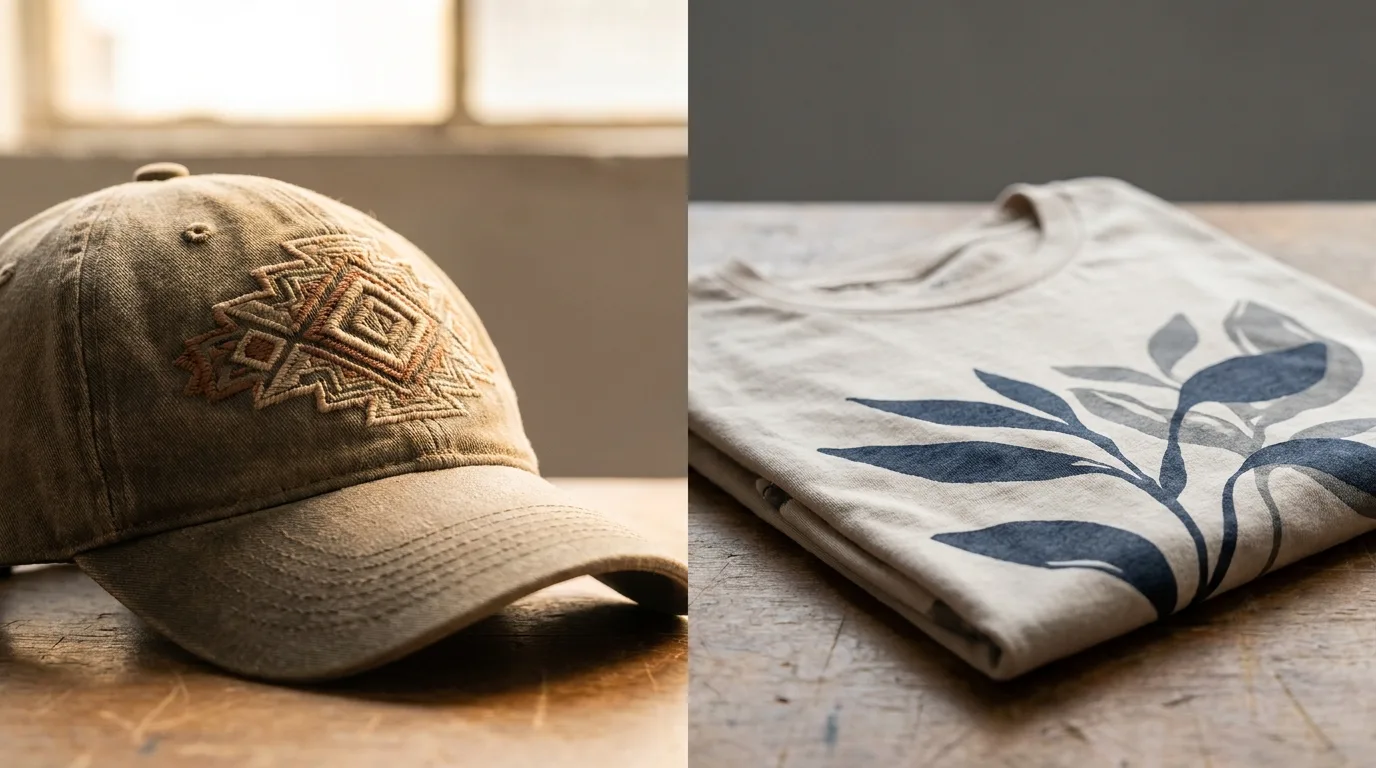
Choosing between embroidery vs printing is one of the first decisions every apparel business, crafter, or print shop has to make. Both methods can produce stunning, professional results, but they shine in very different situations. The wrong choice can mean wasted blanks, frustrated customers, or thin margins, while the right choice elevates a simple garment into a product people are proud to wear. In this guide we break down the costs, durability, fabrics, design factors, and real-world use cases so you can pick the right decoration method with total confidence on every single order.
Embroidery vs Printing: The Core Differences
Embroidery stitches your design directly into the garment using thread, creating a raised, textured, premium finish you can feel under your fingertips. Printing methods like DTF transfers and screen printing lay ink or film on top of the fabric for a smooth, flat result that sits flush with the surface. The two approaches feel completely different in the hand, and that tactile difference often drives the final choice as much as the look does.
Embroidery is the go-to for logos, monograms, and small branded marks where a high-end, dimensional look matters. Printing wins when you need photographic detail, bright gradients, or large full-color graphics that thread simply cannot reproduce affordably. Think of it this way: embroidery communicates heritage, craftsmanship, and durability, while printing communicates creativity, color, and modern flexibility. Neither is universally better, and the smartest sellers keep both in their toolkit so they can match the method to the project instead of forcing every job through one process.
When to Choose Embroidery
Embroidery is ideal for structured, heavier items and corporate branding. It survives hundreds of washes, resists fading, and signals quality the moment a customer touches it. Reach for embroidery when you want a polished, durable mark that lasts the life of the garment and reinforces a premium price point.
- Caps and hats: Thread holds beautifully on curved, structured fronts like trucker and dad hats.
- Polos and outerwear: Left-chest logos look crisp and professional on collared shirts and jackets.
- Small logos and text: Names, monograms, and simple emblems translate perfectly into stitches.
- Heavyweight fabrics: Canvas, fleece, and twill anchor stitches without puckering.
- Workwear and uniforms: Stitched logos read as durable and trustworthy on aprons, vests, and jackets.
If hats are on your list, our blank trucker hat and classic dad hat are popular embroidery blanks built to hold detailed stitch work. They keep their shape under tension and give the needle a stable foundation, which is exactly what you want for a clean, professional left-front or center logo.
When to Choose Printing
Printing is the better call for complex artwork, full-color images, and orders where soft hand feel matters. DTF (direct-to-film) transfers in particular let you reproduce gradients, photos, and unlimited colors on almost any fabric, including cotton, polyester, and blends. Because there is no per-color setup, printing also makes one-off and short-run jobs financially realistic in a way embroidery rarely can.
- Detailed graphics: Photorealistic art, fine shading, and many colors print cleanly.
- Soft synthetics: Performance tees and lightweight fabrics that would pucker under heavy stitching.
- Large designs: Full-front or back prints that would be costly and bulky in thread.
- Small or on-demand runs: No setup fees per color, so short runs stay affordable.
- Vibrant color stories: Neon, watercolor, and multi-tone art that thread cannot match.
For print-ready apparel decoration, explore our DTF transfers by size, which deliver vivid, washable color on demand and let you scale from a single custom tee to a full production run without changing your workflow.
Cost and Turnaround Considerations
Embroidery is priced by stitch count, so simple logos are economical while dense, large designs cost more. There is also a one-time digitizing fee to convert your art into a stitch file. Printing methods like DTF have minimal setup, making them cost-effective for multicolor and short-run jobs. For high volumes of the same simple design, both methods scale well, but embroidery rewards repeat orders since the digitized file is reused at no extra charge. Turnaround also differs: a digitized embroidery file runs predictably batch after batch, while DTF transfers can be printed and pressed quickly, which is a big advantage when a customer needs a rush order or a last-minute color change.
Durability and Fabric Compatibility
Embroidery is the most durable decoration method available and can outlast the garment itself. However, it adds weight and is not suited to thin or stretchy fabrics that distort under the needle. Quality DTF printing is also highly durable, surviving 50-plus washes when applied correctly with the right time, temperature, and pressure, and it works on a far wider range of fabrics and colors. Match the method to the fabric and the use case, and you will rarely go wrong. As a rule of thumb, heavier and structured items lean toward embroidery, while soft, stretchy, or color-rich pieces lean toward print.
How to Decide in Under a Minute
When you are staring at an order and need to choose fast, run through a quick mental checklist. Is the design a small, simple logo on a structured item? Lean embroidery. Is it large, colorful, photographic, or going on a soft synthetic? Lean print. Is the customer chasing a premium, corporate, or heritage feel? Embroidery. Are they price-sensitive or ordering just a few pieces? Print. Do they want both texture and color? Combine the two. This handful of questions resolves the vast majority of decisions without any guesswork, and it keeps your shop consistent so customers always get the best possible result for their specific garment and budget.
Can You Combine Both?
Absolutely. Many brands embroider a small chest logo while printing a larger graphic on the back, getting the premium feel of thread and the visual punch of full-color ink in one piece. Mixing methods is a smart way to maximize perceived value and justify a higher price. You can also embroider a hat to match a printed tee for a coordinated set that feels intentional and elevated. Browse our full custom apparel catalog to plan a mixed-decoration lineup for your store, and check the Mr Beat blog for more decoration tips and product guides.
Frequently Asked Questions
Is embroidery more expensive than printing?
It depends on the design. Embroidery is priced by stitch count plus a one-time digitizing fee, so small logos are affordable while large, dense designs cost more. Printing usually wins for big, multicolor graphics and short runs where setup-free production keeps costs low.
Which lasts longer, embroidery or printing?
Embroidery is the most durable option and can outlast the garment. Quality DTF printing is also long-lasting, easily surviving 50-plus washes when heat-applied correctly with proper time, temperature, and pressure.
Can embroidery reproduce photos or gradients?
Not well. Thread cannot capture fine gradients or photographic detail, so complex, full-color artwork should be printed instead of embroidered. For those designs, DTF transfers are the better choice.
What fabrics work best for each method?
Embroidery suits structured, heavier items like caps, polos, and outerwear. Printing handles a wider range, including soft cotton, polyester, and performance blends that would pucker under heavy stitching.
Which method is better for small businesses just starting out?
DTF printing often has the gentler learning curve and lower setup cost, making it ideal for testing designs and small runs. As you build repeat customers and branded merch, adding embroidery for logos lets you raise prices and broaden your offering.
Can I offer both on the same product?
Yes, and many top sellers do. A common combo is a stitched chest logo with a printed back graphic, which blends premium texture with bold color and lets you charge more for the finished piece.
Ready to decorate your next batch the right way? Shop Mr Beat Print Studio for premium blanks, DTF transfers, and custom embroidery services that make your designs look their absolute best.