
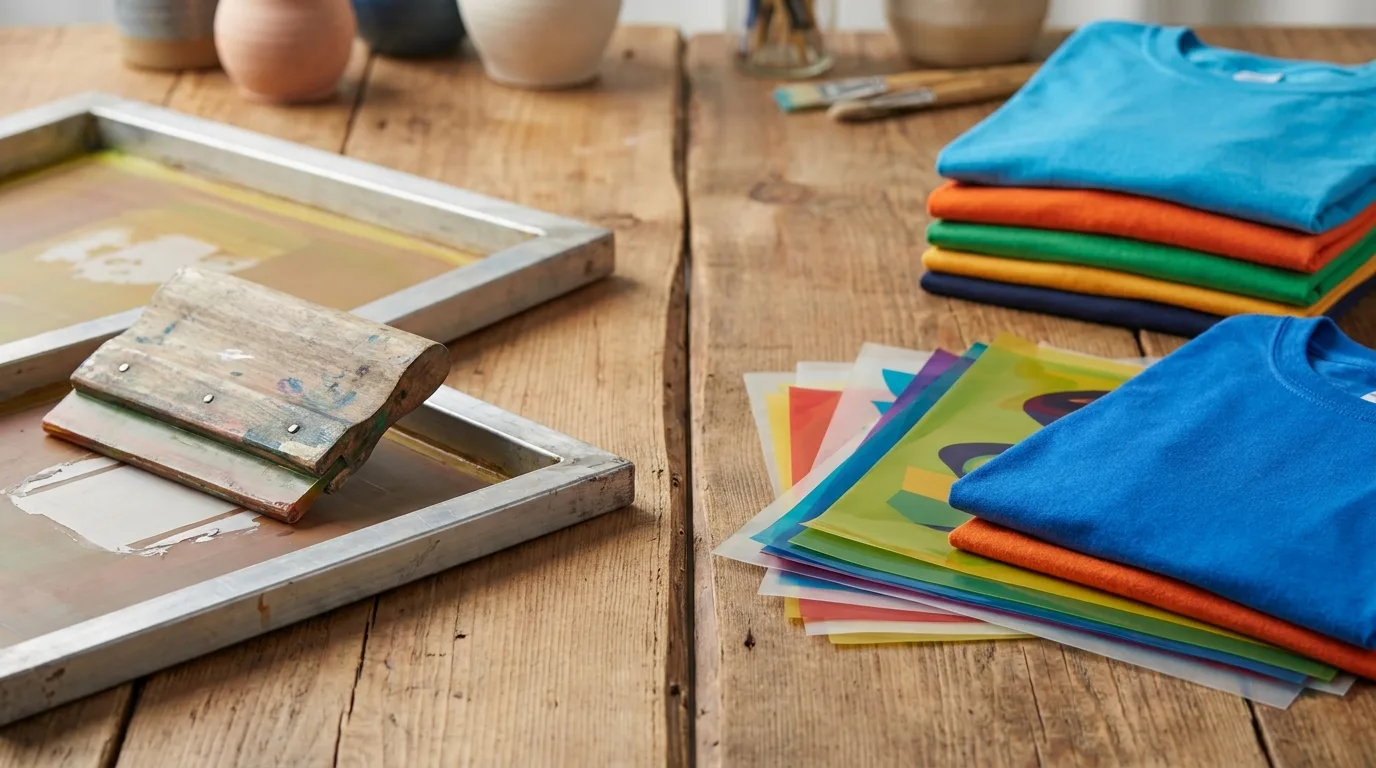
Choosing the right decoration method can make or break your margins, which is why the DTF vs screen printing debate matters so much for apparel sellers. Both produce professional results, but they shine in very different situations. In this guide, we'll compare DTF and screen printing on cost, color, durability, and turnaround so you can pick the method that fits your business.
DTF vs Screen Printing: The Quick Overview
Screen printing is the classic method: ink is pushed through a mesh stencil, one screen per color, directly onto the garment. Direct-to-film (DTF) printing instead prints your design onto a film, coats it with adhesive powder, and heat presses it onto the product. Understanding this core difference explains most of the trade-offs between the two.
In the DTF vs screen printing comparison, the simplest rule of thumb is this: screen printing rewards high volume and few colors, while DTF rewards full-color designs and flexible, lower quantities. Once your order has more than three or four colors, the math and labor of screen printing climb quickly, whereas DTF charges the same whether your design uses two colors or twenty.
Cost Comparison: Setup and Per-Unit Pricing
Cost is where these methods diverge the most. Screen printing has high setup costs because each color needs its own screen, but the per-shirt price drops sharply at scale. DTF has almost no setup cost, so small runs stay affordable.
- Small orders (1-25 pieces): DTF wins easily thanks to zero screen setup.
- Large orders (100+ pieces, few colors): Screen printing becomes cheaper per unit.
- Full-color or photo designs: DTF avoids per-color fees that make screen printing expensive.
It's worth thinking about hidden costs too. Screen printing requires emulsion, screens, reclaiming chemicals, and the labor to burn and clean screens between jobs. DTF needs film, ink, and powder but skips all the screen prep. For a shop juggling many different designs, those screen-related steps quietly eat hours every week. If most of your orders are small batches or one-off custom requests, DTF transfers keep your costs predictable. You can order ready-to-press DTF transfers by size and skip screen setup entirely.
Color and Design Capability
This is where DTF truly stands out. Because it prints like an inkjet, DTF reproduces gradients, photographs, and unlimited colors in a single pass with no added cost. Screen printing handles solid colors beautifully but struggles with complex artwork.
When Screen Printing Wins on Color
For bold one or two-color logos printed in bulk, screen printing delivers thick, opaque ink that can look richer than a transfer. Specialty inks like metallic or puff are also easier with screens, and the ink soaks into the fabric for a classic, breathable finish that many customers love.
When DTF Wins on Color
For detailed illustrations, photo-real designs, or anything with many colors, DTF is the clear winner. There are no color limits and no extra fees, making it perfect for creative print-on-demand work. Gradients and fine shading that would require expensive halftone screens in screen printing come out cleanly with DTF every time.
Durability, Feel, and Fabric Flexibility
Both methods last well when done right, but they feel different on the garment. Screen-printed ink soaks into the fabric for a thin, breathable hand on cotton. DTF sits as a thin flexible layer on top, which feels slightly more present but stretches and resists cracking.
- Fabric range: DTF works on cotton, polyester, blends, canvas, and more; screen printing is happiest on cotton.
- Stretch: Modern DTF flexes with athletic and knit fabrics.
- Wash life: Both can exceed 50 washes with proper application and care.
Because DTF adapts to so many materials, it pairs well with a varied lineup. Press the same design onto tees, fleece, and a cotton canvas tote bag without switching processes.
Turnaround and Workflow for Your Shop
Speed and simplicity matter when orders pile up. DTF transfers can be pre-printed, stored, and pressed on demand, so you fulfill orders the same day a customer buys. Screen printing requires reclaiming screens between jobs, which slows down quick turnarounds and custom one-offs.
For sellers handling many small orders, DTF also reduces waste. With our online gang sheet builder, you can pack dozens of designs onto a single sheet, lowering cost per print and keeping a ready supply of transfers on hand.
Common Mistakes When Choosing a Method
Many new shop owners pick a method based on a single factor and regret it later. Choosing screen printing for a business built around small, varied, full-color orders leads to crushing setup costs and slow turnarounds. On the flip side, leaning entirely on DTF for huge 500-piece single-color runs leaves money on the table that bulk screen printing would have saved. Other common missteps include ignoring the fabric mix you actually sell, underestimating the labor of reclaiming screens, and forgetting that DTF lets you test new designs with zero upfront risk. Match the method to your real order patterns, not to a one-time job.
Pros and Cons at a Glance
- DTF pros: No setup fees, unlimited colors, works on many fabrics, fast and storable, great for small runs.
- DTF cons: Slightly higher per-piece cost on huge simple runs, a thin layer you can feel on the surface.
- Screen printing pros: Lowest cost at high volume, rich opaque ink, specialty finishes, soft breathable hand on cotton.
- Screen printing cons: Expensive setup per color, slow turnaround, limited fabric range, poor fit for complex art.
So, Which Should You Choose?
Choose screen printing if you regularly run large orders of simple, few-color designs and want the lowest possible per-unit cost at scale. Choose DTF if you sell full-color art, fulfill small or mixed batches, decorate many fabric types, or need fast turnaround without setup fees. Many successful shops actually use both, leaning on screens for bulk events and DTF for everyday custom work.
Frequently Asked Questions
Is DTF cheaper than screen printing?
For small runs and full-color designs, DTF is almost always cheaper because there are no screen setup fees. For large bulk orders with only one or two colors, screen printing often wins on per-unit price.
Does DTF last as long as screen printing?
Yes. Properly applied DTF transfers can survive 50 or more washes, comparable to quality screen prints. Correct press settings and gentle washing are essential for both methods.
Which method feels softer on a shirt?
Screen printing tends to feel thinner because ink absorbs into the fabric, while DTF sits as a thin flexible layer on top. The difference is small, and modern DTF is far softer than older transfer methods.
Can I do both in one shop?
Absolutely. Many businesses use screen printing for high-volume jobs and DTF for small, detailed, or multi-fabric orders, getting the best of both worlds.
At what quantity does screen printing become worth it?
As a rough guide, simple one or two-color designs often tip in screen printing's favor around 50 to 100 pieces, where setup costs spread thin enough to beat DTF on price.
Which is better for full-color photo designs?
DTF is clearly better for photographic and multi-color artwork. Screen printing those designs requires costly halftone separations, while DTF prints them in one pass with no extra fees.
Whichever method fits your next project, Mr Beat Print Studio has the transfers, blanks, and gang sheet tools to make it happen. Browse our catalog and start printing smarter today.