
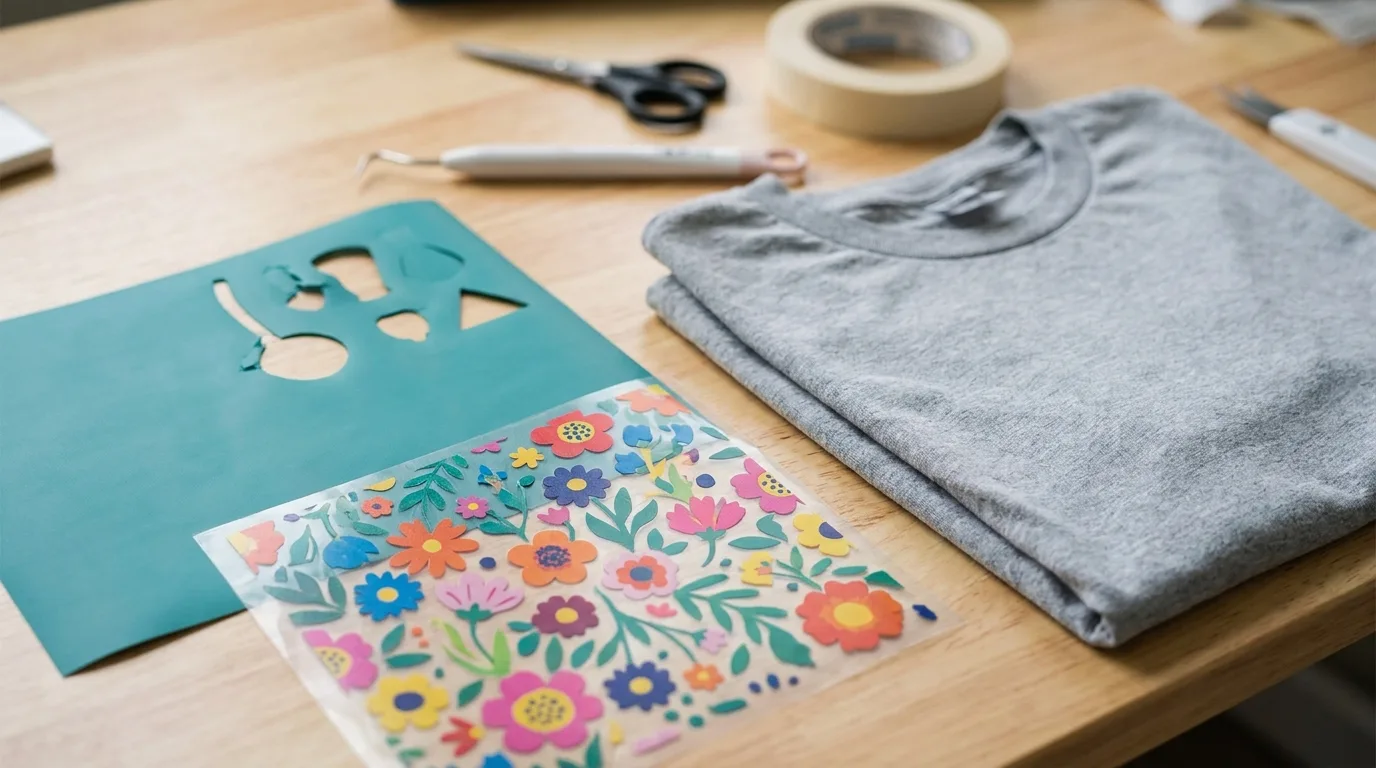
For crafters and small apparel shops, the DTF vs HTV decision shapes how detailed, colorful, and scalable your products can be. Heat transfer vinyl (HTV) has been a craft-room staple for years, but direct-to-film (DTF) printing is quickly winning fans. In this guide, we'll compare DTF and HTV on color, detail, durability, and cost so you can pick the right method.
DTF vs HTV: Understanding the Basics
HTV is a colored vinyl sheet that you cut with a craft cutter, weed by hand, and heat press onto a garment. Each color is a separate layer of solid vinyl. DTF prints a full-color design onto film, coats it with adhesive powder, cures it, and presses it on as one transfer.
The core distinction in the DTF vs HTV comparison is simple: HTV is cut from solid-color material, while DTF is digitally printed, so DTF handles unlimited colors and fine detail that vinyl can't match. With HTV, every color and shape must be physically cut and weeded; with DTF, the printer reproduces the entire design at once, no matter how intricate.
Color and Detail: Where DTF Pulls Ahead
If your designs are colorful or intricate, DTF has a major advantage. Because it prints like an inkjet, DTF reproduces gradients, photos, tiny text, and unlimited colors in one press. HTV requires layering a separate vinyl piece for every color, which gets tedious fast.
- HTV strengths: Bold single-color text, names, numbers, and simple shapes.
- HTV limits: Multi-color designs mean weeding and layering each color by hand.
- DTF strengths: Photo-real artwork, gradients, and fine detail with no weeding.
For complex designs, DTF saves enormous time. Order ready-to-press DTF transfers by size and skip the cutting and weeding entirely. Gradients, which are simply impossible with solid vinyl, come out smooth and photographic with DTF.
Durability, Feel, and Stretch
Both methods bond well with heat, but they feel different on the garment. Quality HTV is durable and slightly thick, sitting as a solid layer on the fabric. DTF is a thinner, more flexible layer that stretches naturally and breathes a bit more.
How HTV Holds Up
Premium HTV resists cracking and lasts many washes, though thick multi-layer designs can feel heavy and stiff. Single-layer names and numbers hold up especially well, which is why HTV remains popular for sports jerseys and personalized text.
How DTF Holds Up
DTF stretches with knit and athletic fabrics and resists cracking when applied at the right temperature and pressure. Its thinner profile makes detailed designs feel lighter than layered vinyl, and because the whole design presses as one piece, there are no stacked layers to peel apart over time.
Cost, Time, and Scalability
For one or two simple items, HTV is cheap and beginner-friendly, requiring only vinyl, a cutter, and a press. But labor adds up fast. Weeding and layering every color by hand limits how many orders you can fulfill in a day.
- HTV: Low material cost but high labor for detailed or multi-color jobs.
- DTF: Slightly higher per-transfer cost but minimal labor and unlimited colors.
- Scaling: DTF wins when order volume or design complexity grows.
To keep DTF costs low, use gang sheets that fit many designs on one film. Our online gang sheet builder lets you nest dozens of designs so you press them on demand and pay less per piece.
Which Is Easier for Beginners?
Both methods are approachable, but in different ways. HTV has the lowest entry cost and a gentle learning curve for simple text, yet weeding tiny letters and intricate shapes can frustrate newcomers and consume hours. DTF removes that hands-on cutting step entirely if you buy pre-printed transfers, so a beginner can produce a complex full-color shirt on day one with nothing but a heat press. If you enjoy hands-on crafting and make simple designs, HTV is a fun starting point. If you want professional, detailed results with minimal fuss, ordering DTF transfers is the easier path.
Real-World Use Cases
Each method has natural fits in everyday projects:
- HTV: Team jersey numbers, single-color slogan tees, personalized name shirts, and simple craft gifts.
- DTF: Full-color logos, photo-based designs, detailed illustrations, and mixed-fabric merch lines.
- Either: Small batches of basic text, where your existing equipment may decide for you.
Choose HTV if you mainly make simple one-color names, numbers, or text and only need a few pieces at a time. Choose DTF if you want full-color art, fine detail, faster production, or the ability to scale your shop. Many crafters keep HTV for quick single-color jobs and move to DTF as their designs and order volume grow. You can press either onto blanks from our product catalog.
Common Mistakes to Avoid With Both Methods
A few avoidable errors trip up newcomers to either method, and knowing them saves time, material, and customer complaints. With HTV, the most frequent mistakes are mirroring the design incorrectly before cutting, leaving stray bits behind during weeding, and stacking too many vinyl layers, which creates a stiff, heavy patch that cracks at the seams. Using the wrong vinyl type for the fabric, such as standard HTV on stretchy athletic wear, also leads to early failure. With DTF, the biggest pitfalls are under-pressing, skipping the pre-press step that removes moisture, and peeling the carrier film at the wrong moment. For both methods, always confirm your heat press hits its true temperature with an infrared thermometer, since an inaccurate press quietly ruins otherwise perfect work. Run a quick test press on a scrap garment whenever you switch fabrics or designs.
Cost and Quality Considerations for Growing Shops
As your shop grows, the cost and quality math shifts in important ways. HTV stays cheap on raw material but its hidden cost is your time, since every multi-color or detailed order demands hands-on weeding and layering that does not scale. DTF carries a modestly higher per-transfer cost yet slashes labor dramatically, letting you produce far more pieces per hour with consistent, professional quality. Gang sheets tip the balance even further in DTF's favor by lowering the cost of each design on a packed sheet. When you weigh material plus labor together, most shops find that DTF delivers better quality at a lower true cost once volume or design complexity climbs, while HTV remains a smart, low-risk choice for occasional simple jobs.
Frequently Asked Questions
Is DTF better than HTV for multi-color designs?
Yes. DTF prints unlimited colors in one pass with no weeding or layering, while HTV needs a separate vinyl layer for each color. For anything more than one or two colors, DTF is far more efficient.
Does HTV last longer than DTF?
Both last well when applied correctly. Quality HTV and properly pressed DTF can each survive many washes, though thick layered HTV may feel stiffer and DTF stays more flexible.
Which is easier for beginners?
HTV has a lower entry cost and is simple for basic text, but it requires cutting and weeding. DTF skips those steps if you order pre-printed transfers, making it very beginner-friendly too.
Can I use the same heat press for both?
Yes. A standard heat press works for both DTF and HTV; you just adjust the temperature, time, and pressure to match each method's recommendations.
Do I need a cutting machine for DTF?
No. DTF transfers press as a single piece with no cutting or weeding, so you don't need a craft cutter. HTV, on the other hand, requires a cutter to shape each color.
Which method is better for small, intricate text?
DTF handles tiny text and fine detail much more easily, since it prints rather than cuts. Very small HTV letters are difficult to weed and may lift, while DTF reproduces them crisply.
Whether you stick with vinyl or upgrade to film, Mr Beat Print Studio has the DTF transfers, blanks, and tools you need. Browse our catalog and start creating custom apparel today.