
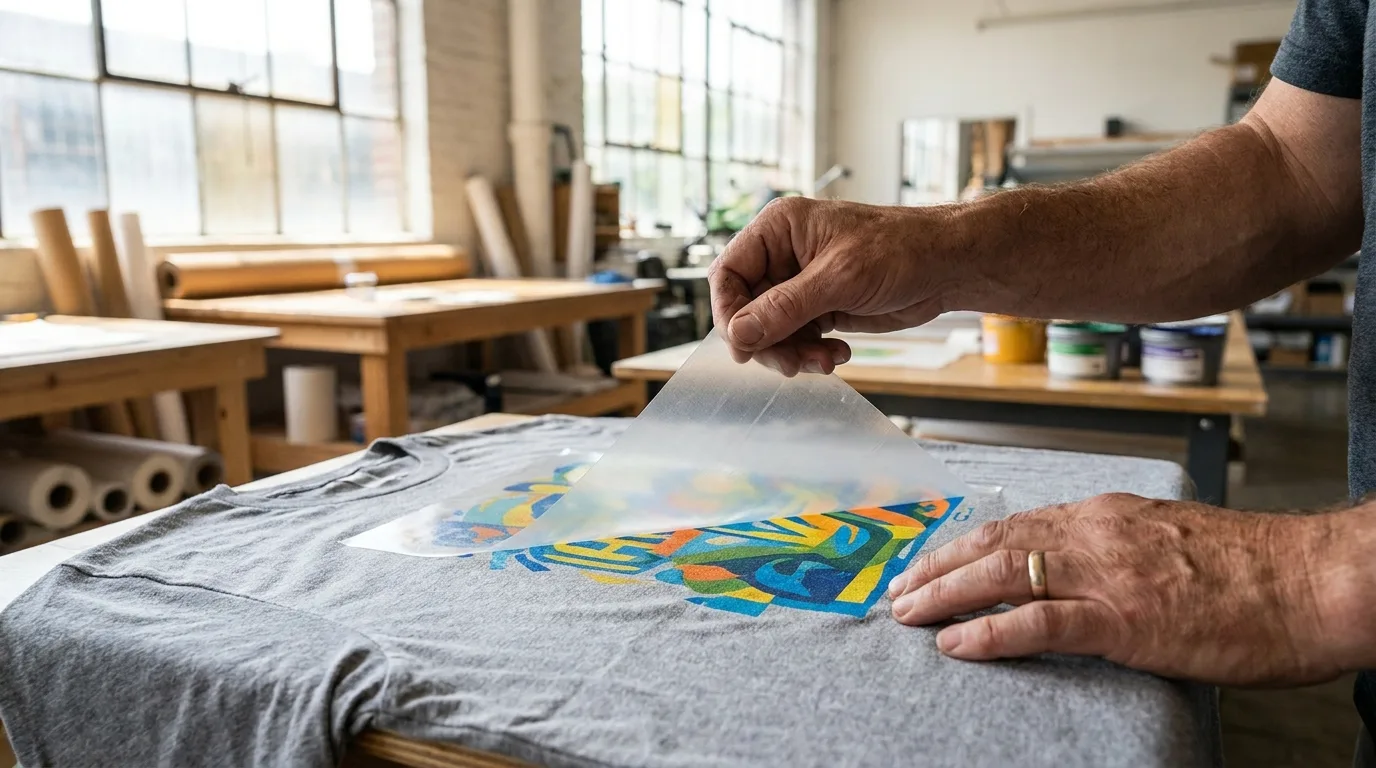
If you have ever wondered about cold peel vs hot peel transfers, you are not alone. The peel method affects your workflow speed, the finish of your design, and even the durability of the print. Understanding the difference helps you choose the right film and avoid lifting or ruining a transfer. Here is a clear breakdown of both methods, the pros and cons of each, and exactly when to use them.
What Cold Peel vs Hot Peel Really Means
The terms refer to when you remove the PET carrier film after pressing your DTF transfer. With a hot peel, you remove the film immediately while it is still warm. With a cold peel, you wait until the transfer has fully cooled to room temperature before peeling. The film type you buy is engineered for one method or the other, so the adhesive and release coating are formulated accordingly. Peeling at the wrong time for your film can cause the design to lift, stretch, or leave residue.
Most DTF film is sold clearly labeled as hot peel or cold peel, so always check before you press. If you are ever unsure, a cold peel is the safer default because waiting never harms a transfer, while peeling too early on a cold peel film almost always damages the print.
The Benefits of Hot Peel Transfers
Hot peel film is all about speed. Because you remove the carrier right after pressing, you can move through batches quickly, which is ideal for high-volume shops. Hot peel also tends to leave a slightly glossier finish and a smoother surface texture.
- Faster workflow: No waiting between press and peel.
- Higher output: Great for fulfilling large orders quickly.
- Glossier finish: Produces a smooth, shiny surface on the print.
- Less downtime: Keeps your production line moving efficiently.
The trade-off is that hot peel requires good timing. If your press is interrupted or you hesitate, the film can cool unevenly and lift parts of the design. Hot peel rewards a steady, practiced rhythm, which is why busy production shops favor it.
The Benefits of Cold Peel Transfers
Cold peel film trades a little speed for control and finish. Waiting for the transfer to cool gives the adhesive time to set fully, which can improve fine detail retention and produce a softer, matte look. Many printers find cold peel more forgiving for intricate designs with small text or delicate lines.
Why Choose Cold Peel
- Matte finish: Delivers a softer, less shiny surface that many customers prefer.
- Better fine detail: The cooled adhesive holds small text and thin lines cleanly.
- More forgiving: Less risk of lifting delicate elements during the peel.
- Consistent results: Cooling removes the guesswork of timing a hot peel.
Whichever finish you prefer, our DTF transfers by size are produced for reliable, clean peeling every time.
Cold Peel vs Hot Peel: Which Should You Use?
There is no universally better option. It comes down to your priorities and the film you buy. If you run a busy shop and need to fulfill orders fast, hot peel film keeps you moving. If you want a premium matte finish or you print highly detailed artwork, cold peel may give you cleaner results. The most important rule is to match your peeling technique to the film type. Never try to hot peel a cold peel film or vice versa, since each is engineered for a specific process.
If you are just starting out, cold peel is often easier to learn because the timing is more forgiving and mistakes are less likely. As you gain confidence and volume grows, many printers add hot peel film to their toolkit so they can switch based on the job in front of them.
How Finish Affects the Look and Feel
Beyond workflow, the peel method shapes the customer experience. A glossy hot peel finish makes colors look slightly more saturated and reflective, which suits bold, graphic designs and sportswear. A matte cold peel finish blends more naturally into the fabric, giving a softer, more premium look that pairs well with vintage styling, minimal logos, and fashion apparel. Some printers even keep both on hand so they can match the finish to the brand they are printing for. If you sell to clients, asking whether they prefer a shiny or matte look is a small touch that sets your work apart.
Tips for a Perfect Peel Every Time
Regardless of method, a smooth, confident peel motion produces the best results. Peel in one steady pull at a low angle rather than yanking straight up. If the design starts to lift, stop and re-press for a few seconds. Always confirm your press settings and let cold peel transfers cool completely before testing. Avoid peeling over a curved or uneven surface, since the carrier separates most cleanly off a flat, supported design. For larger projects and bulk runs, the online gang sheet builder lets you fit multiple designs on one sheet so you can peel efficiently and reduce waste.
Once you understand cold peel vs hot peel, choosing and applying the right film becomes second nature. For more pressing and finishing guides, explore the Mr Beat Print Studio blog.
Frequently Asked Questions
What is the difference between cold peel and hot peel DTF?
Hot peel transfers have the carrier film removed immediately after pressing, while cold peel transfers require the film to cool to room temperature first. The film is engineered for one specific method.
Is cold peel or hot peel better?
Neither is universally better. Hot peel is faster and glossier for high-volume work, while cold peel offers a matte finish and better fine-detail retention. Choose based on your workflow and the film you buy.
Can I cold peel a hot peel transfer?
It is not recommended. Each film is formulated for a specific peel method, so using the wrong technique can cause lifting or poor adhesion. Always follow the film type instructions.
Which peel type is best for beginners?
Cold peel is often easier for beginners because the timing is more forgiving. You simply wait for the transfer to cool, reducing the risk of peeling too soon.
Does the peel method change how durable the print is?
When done correctly for the film type, both methods produce durable prints. Problems with durability usually come from peeling at the wrong time, weak pressure, or skipping the post-press, not from the peel style itself.
How do I know if my film is hot peel or cold peel?
Check the product label or supplier instructions, which almost always specify the peel method. If it is missing, default to a cold peel and let the transfer cool fully before testing, since that approach is the safest.
Find premium, easy-to-peel transfers in every finish at Mr Beat Print Studio and press with confidence.